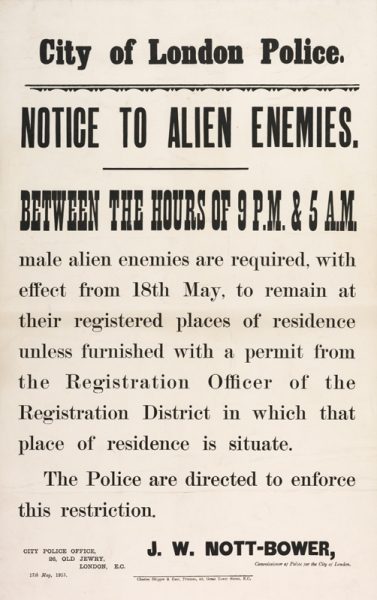
Under the Aliens Restriction Act, passed on 5th August 1914 , all foreign nationals were required to register with the police, and by 9th September just under 67,000 German, Austrian and Hungarian nationals had done so.
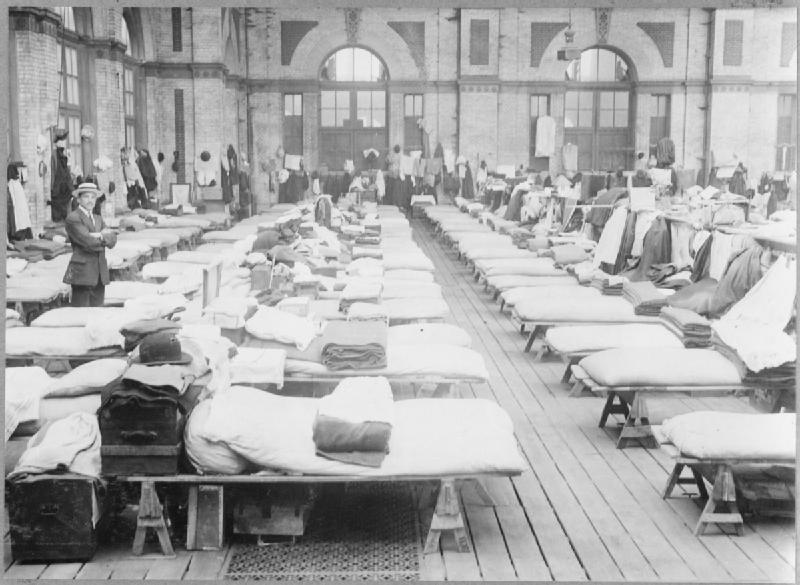
The policy on internment shifted throughout the first nine months of the war, but targeted only foreigners suspected of being a threat to national security and was repeatedly suspended due to lack of facilities in which to intern them. By the end of September, over 10,500 enemy nationals were being held, but between November 1914 and April 1915 few arrests were made and thousands of internees were actually released.
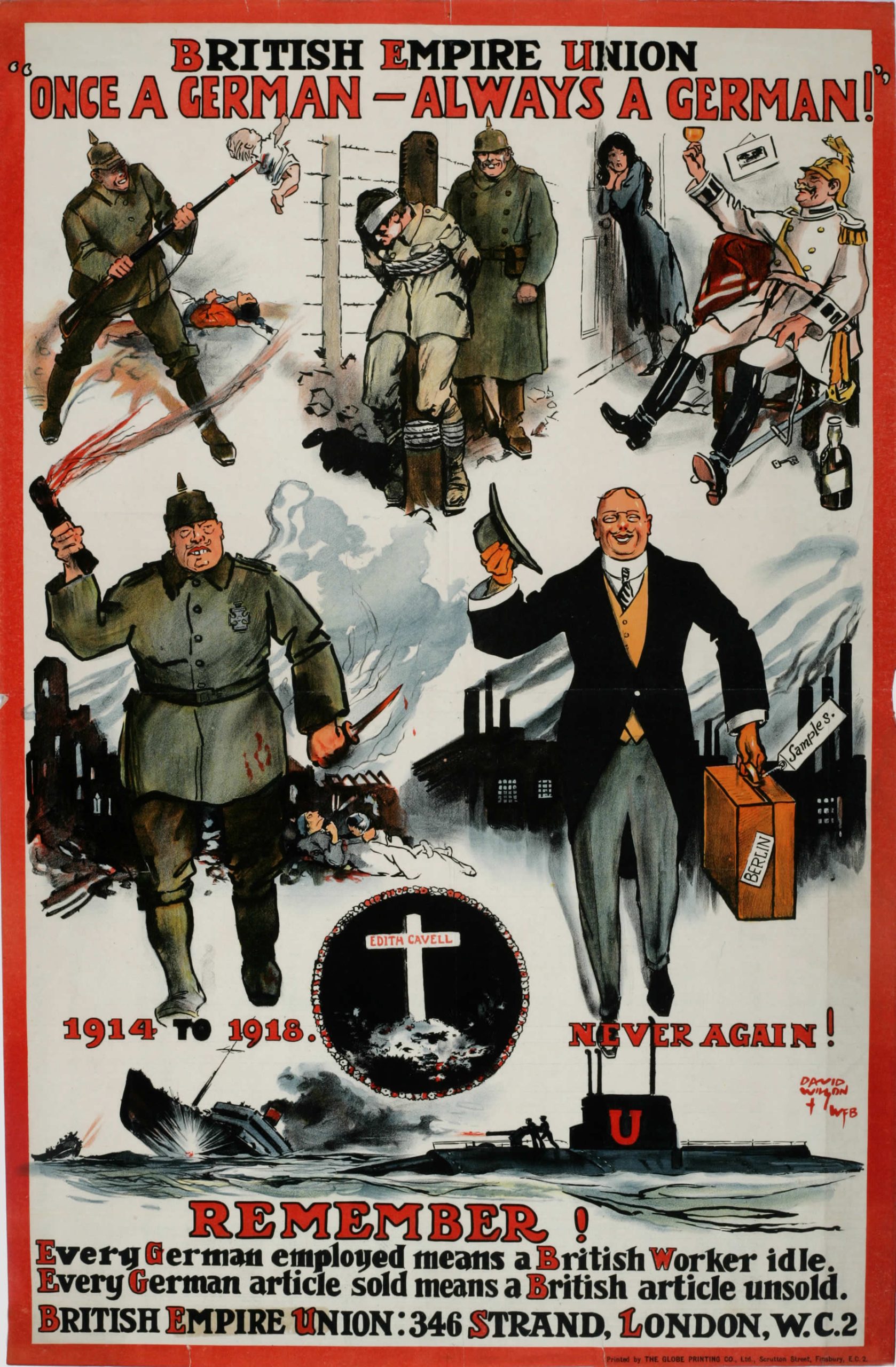
Government policy changed significantly when public anti-German hostility, which had been building since the previous October following reports of German atrocities in Belgium, surged after the sinking of the Lusitania on 7 May 1915. For a week, some of the most widespread rioting witnessed in wartime Britain occurred in towns and cities across the country, during which virtually every German-owned shop had its windows broken. Although the government believed that enemy nationals still at liberty posed no military threat, it was forced to bow to public pressure and implement a general programme of internment. For their own safety as much as that of the British population, all non-naturalised enemy nationals of military age were to be interned, while those over military age were to be repatriated.
By 1917, the small number of enemy nationals still residing at liberty and the fact that no acts of sabotage had been committed since the declaration of war allowed the home army to relax its guard of vulnerable points, leaving only a small number of places of vital national interest still under protection.