GS/10320 L/Cpl Ernest George Evans
10th Battalion, - The Queens Own (Royal West Kent Regiment)
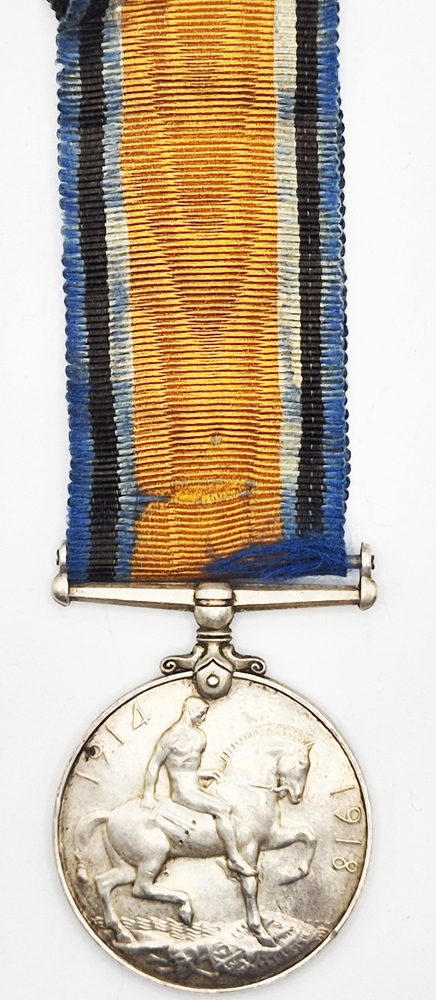
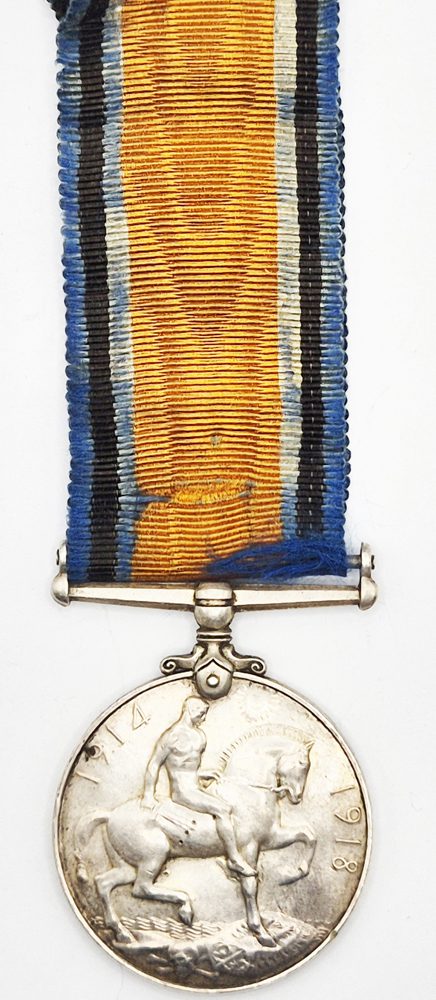
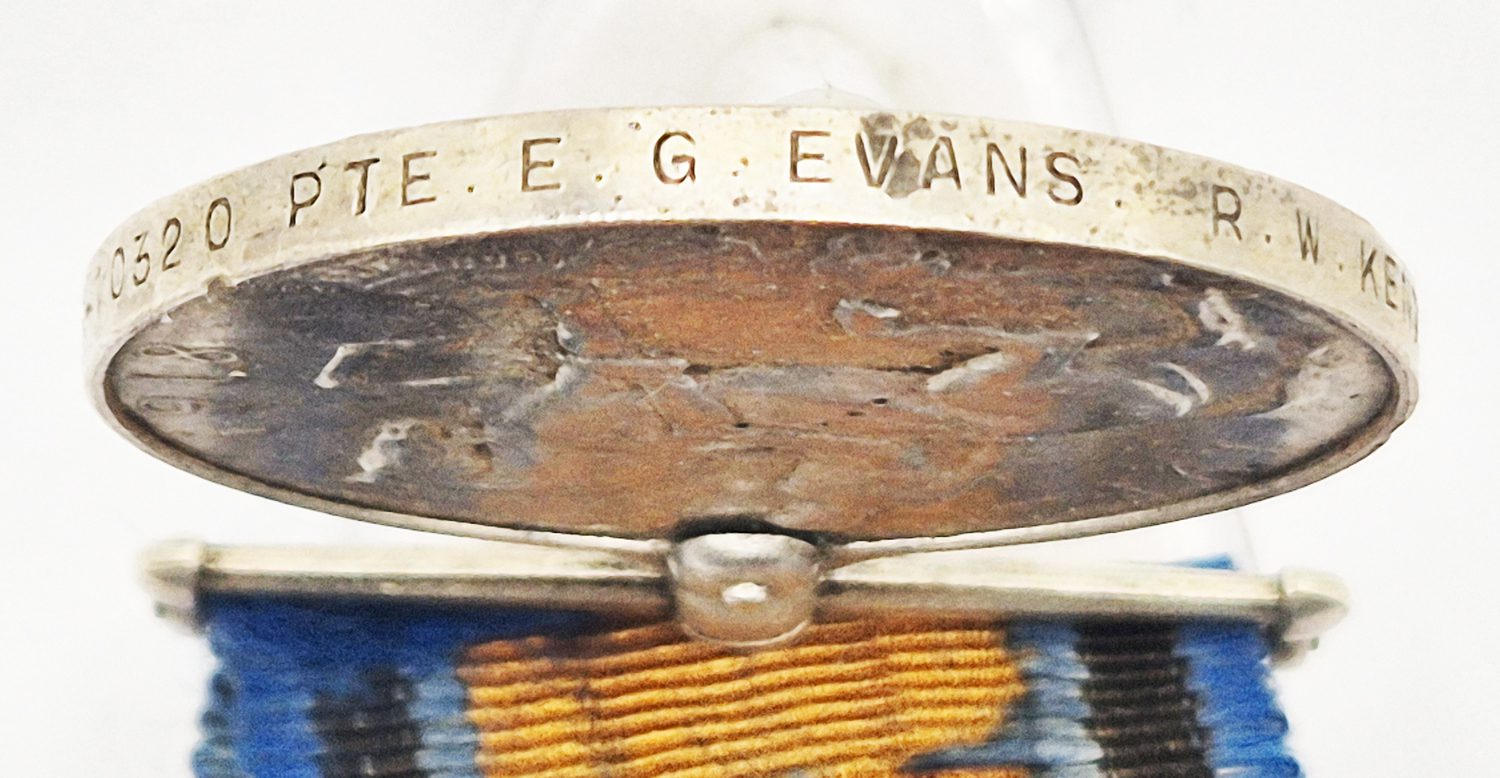
British War Medal
(Also entitled to the Victory Medal)
FAMILY
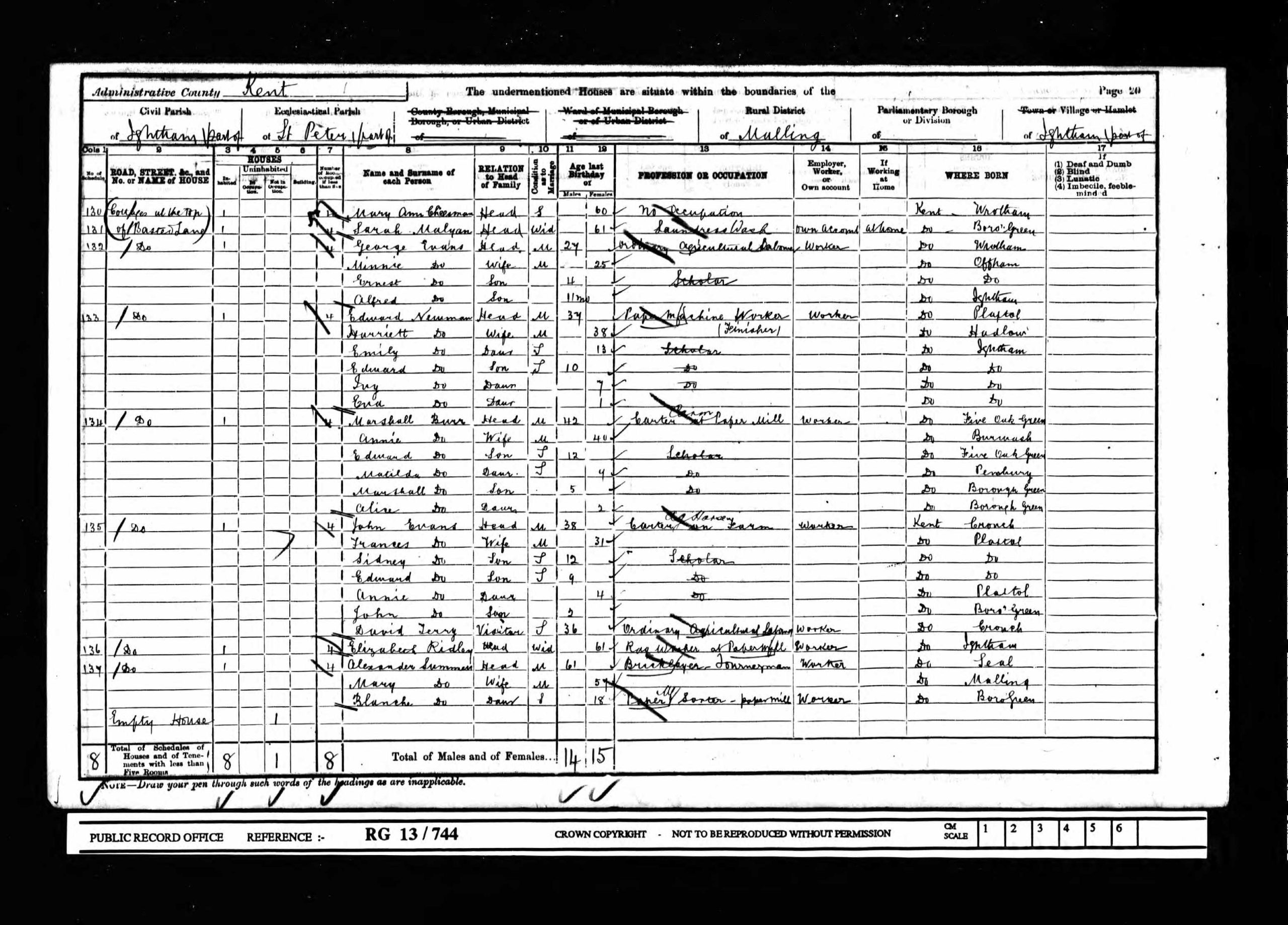
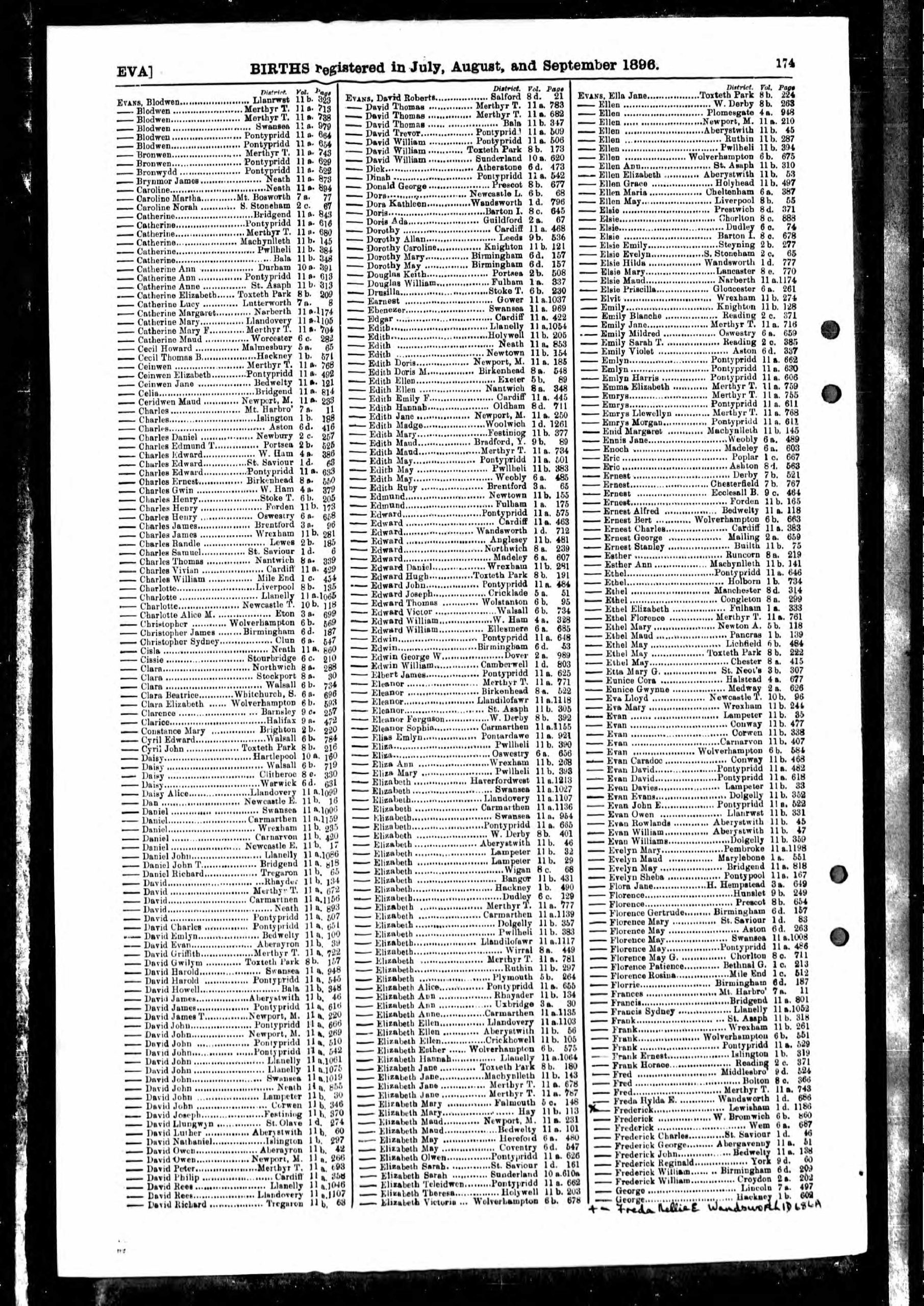
Ernest George Evans was born in the middle of 1896 in Offham, Kent. On the 1901 census, aged 4, Ernest is shown with his family living in a cottage at 132 Basted Lane, near Ightham, Kent. His Father Joseph George (listed simply as George on the census) Evans (27) is an agricultural labourer. The rest of the household consists of his Mother, Minnie (25), and baby brother Alfred James (11 months).
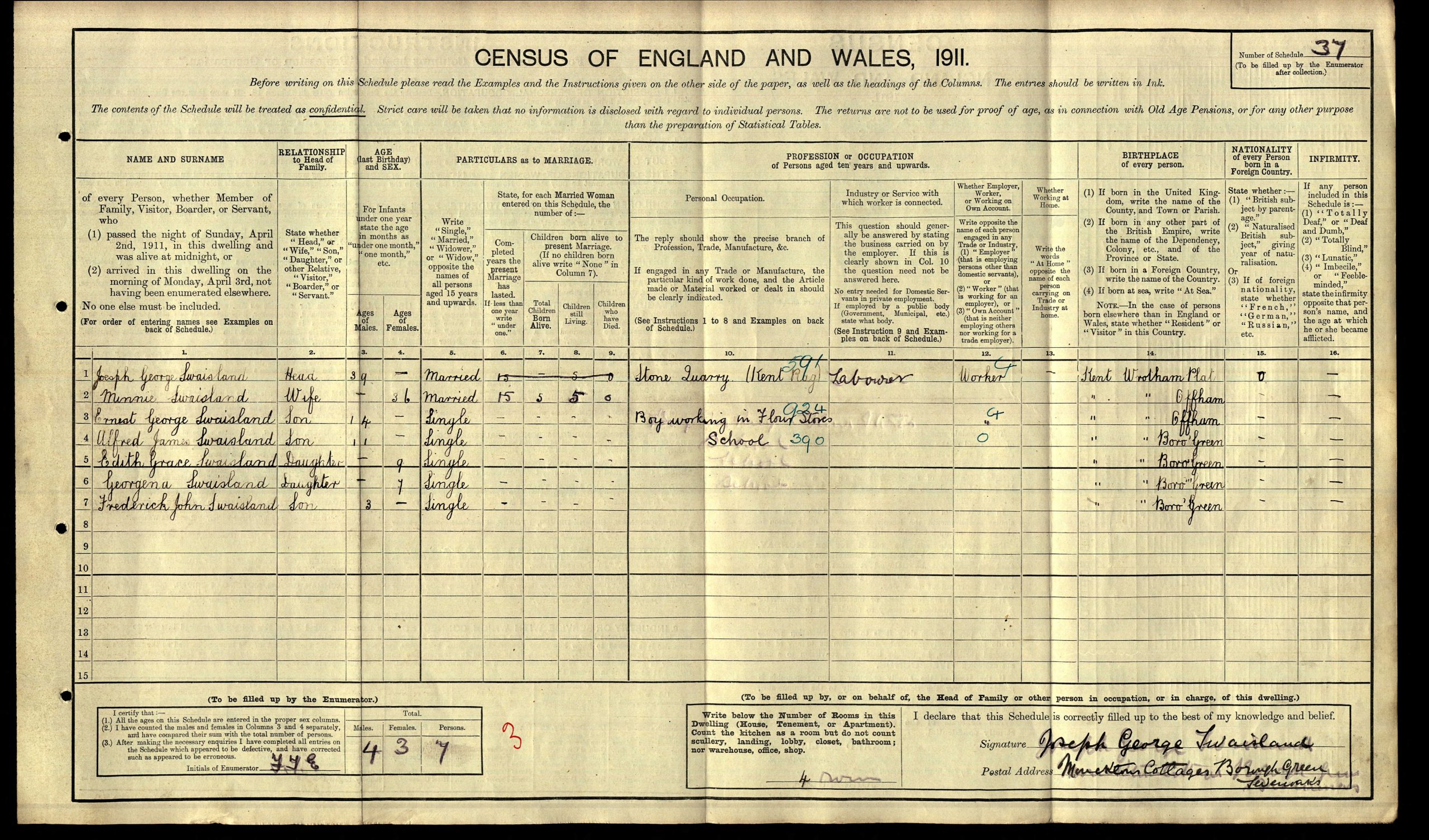
By 1911, the family had moved to 8 Monkton’s Cottages, Borough Green, Kent. For whatever reason they gave their surname as “Swaisland” on the census, which was Joseph’s Mother’s maiden name. Joseph George (now using his full name) (39) and Minnie (36) are confirm as being married for the past 15 years. Ernest is now 14, and employed as a “boy working in (the) flour stores,” almost certainly at Platt Mill, about a mile up the road in St. Mary’s Platt. His younger brother Alfred is now 11, and still at school. The family has expanded to include Edith (9), Georgina (7), and Frederick (3).

ENLISTMENT
On his enlistment papers, he gave his address as “Club House,” St Mary’s Lane, Wrotham. His next of kin is recorded as his mother, Minnie, at the same address. He gave his occupation as “paper maker.” This was probably at the paper mill in Basted.
Based on his attestation date of 25th October 1915, Ernest was probably recruited as part of the Derby Scheme. At age 19 years and 2 months. he was assigned to the 10th Battalion, The Queens Own (Royal West Kent Regiment). His service papers show he was 5ft 4in tall.
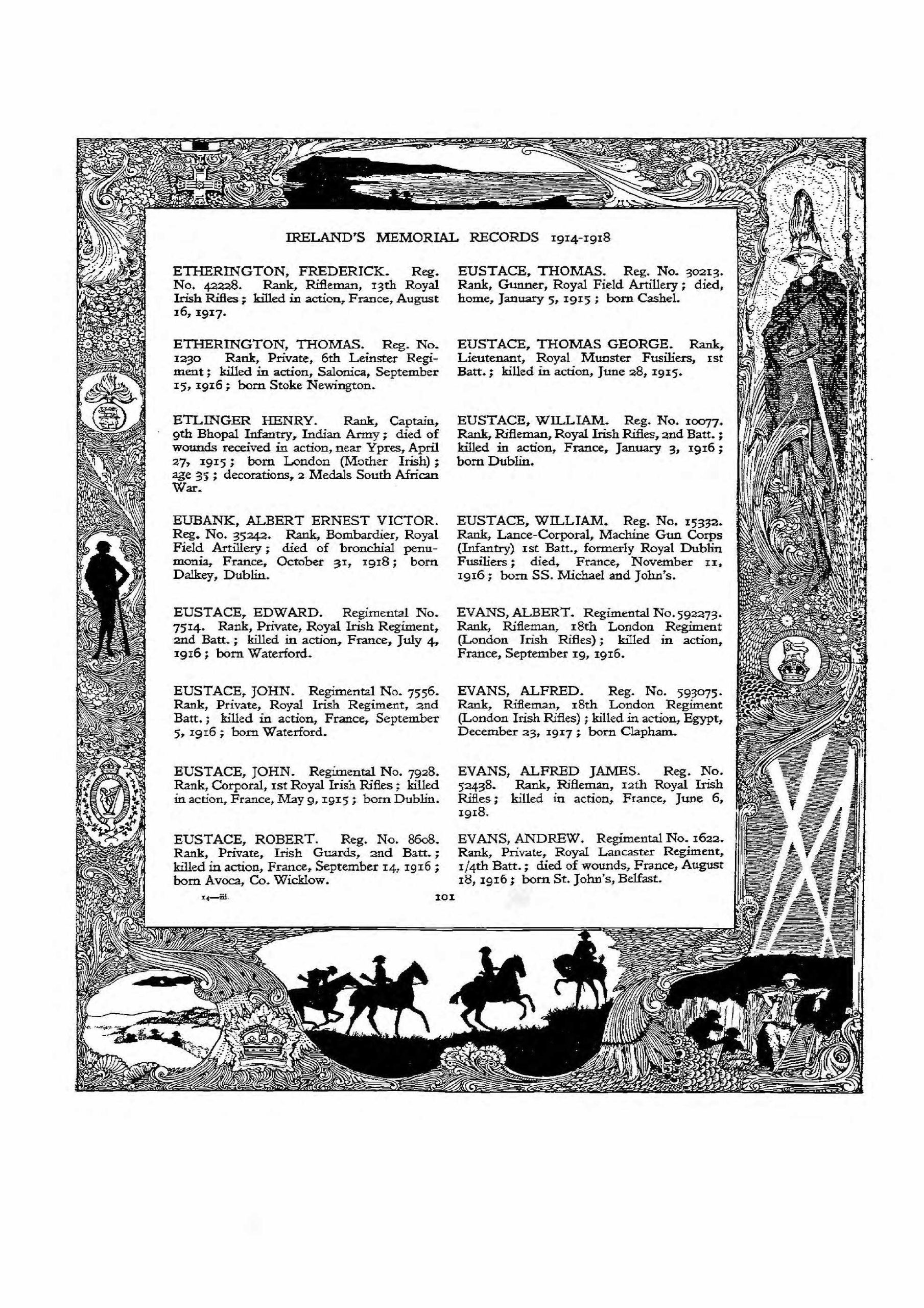
Ernest’s younger brother Alfred enlisted and was placed in the Royal Warwickshire Regiment (probably as a replacement for men of the regiment lost), then later the 12th battalion Royal Irish Rifles.
Ernest was sent to France with the entire 10th West Kents. Having sailed from Southampton on ships “St Tudno” and “City of Benares,” they landed in France on 4th May 1916.
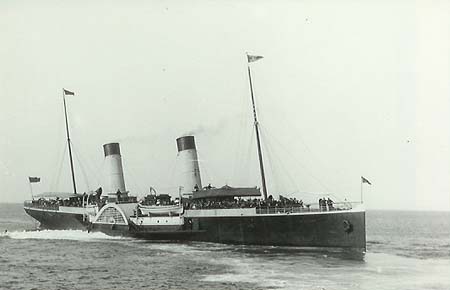
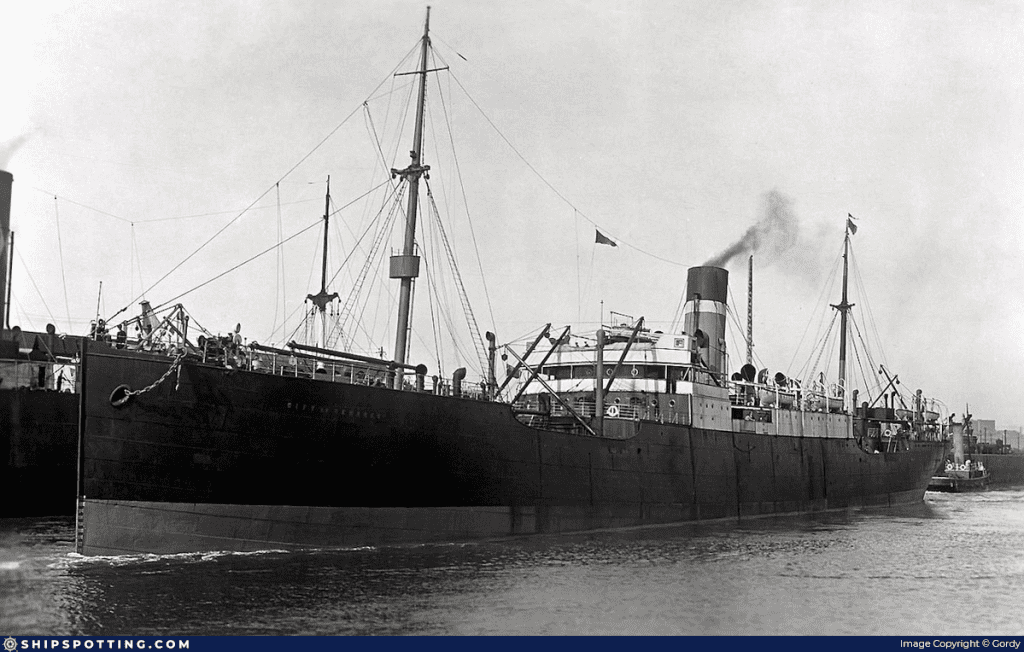
See also George Bance, another soldier in of the same battalion who was also local to Platt and Borough Green, and had close association with the Paper Mill – his brother Harry worked there (who also served – in the Machine Gun Corps).
The Somme
Having missed the initial stages of the Battle of The Somme, due to continuation training in Ploegsteert (Flanders), the 41st Division was about to play a major role in the battle, in mid-September, at a phase known as the Battle of Flers–Courcelette. The 41st Division came under the command of the Forth Army, XV Corps for this operation.
The 10th West Kents spent August on the right flank inadvertently engaged in sporadic fighting near Delville Wood, while making preparations for the forthcoming attack. On the 12th September 1916, the 10th West Kents ventured forward in the North of the wood, past the front lines occupied by the 23rd Middlesex to set-up six strongpoints. Having completed this, they relieved the Middlesex, and held the front lines and the strongpoints, coming under heavy shelling. The were relieved on the 13th, to ready for a full-scale assault which was planned for the 15th September. The aim of the operation was to break throught the German lines along a 3 1/2 mile front. The 41st Division would attacking the village of Flers, including it’s subsidary defences. With a view to advancing a further 2,000 yards to capture the village of Gueudecourt. Zero hour was set for 06:20am BST on the 15th September 1916. The final objectives were meant to be reached by noon, allowing enough daylight for full exploitation and consolidation of the positions. Once full defences were setup, two full divisions of cavalry would sweep through. The 10th West Kents were to support the cavalry after the capture of Gueudecourt.
Tanks were used for the first time here, and were used to support the advance of infantry. Despite many problems with navigation and mechanical failure, the tanks were debuted to some success, not least for providing some cover to advancing infantry and an element of panic among the Germans. The 41st division fought with the support of ten tanks. Ernest would have been among the very first men to have seen them in action. The photograph below shows men of the 41st Division with one of their tanks sometime during the Battle of Fler-Courcelette.

By 8.20am the the first of the 41st Division’s tanks rolled into Fler itself, followed shortly after by the infantry. By 10.00am the Bavarian Divisiona troops were retreating back to Gueudecourt. Ernest and the 10th West Kents went “over the top” just after 10am and captured the German “Switch Trench”, North-West of Flers, by 1pm under a heavy artillery barrage. They also came under shellfire while consolidating their position. The 41st Division had liberated Fler from German hands, and taken many prisoners in the process.
Gueudecourt wasn’t attacked until the following evening (16th September). Ernest finally left the front line area at 3.30am on the 18th September. The total recorded casualties for the Battle of Flers-Coucelette was of the 29,367. The 41st Division alone sustained 3,000 casualties over the battle’s 7 day duration. The 10th West Kent’s casualties was recorded as 7 Officers and 94 men. Later, in another action, the Village of Gueudecourt was finally captured by the 88th Brigade on 26th of September 1916.
See also Wallace Bottle, another soldier of the 41st Div, who was killed around this time, who came from near where Ernest was born, in West Malling.
A memorial to the achievements and memory of the men killed of the 41st Division stands in Flers today, at the point where the first tank arrived. The 10th Bn R.W.Kent Regt are named on the memorial, along with the other units and formations which made up the division. See below for photos of the memorial (click to enlarge).


The respite was short-lived, as by the 28th September the 10th West Kents were back in the front line trenches. The were shelled continuously and heavily, but the Germans didn’t mount a counter-attack, as was anticipated. They were relieved on the 1st October. The Battle of Le Transloy Ridges had begun on the same day. The 10th West Kents with the rest of the 123rd Brigade were been held in reserve. The 124th Brigade were the main attacking force on this occasion and reached their objective, under a hail of German machine-gun bullets. By nightfall, the heavy losses meant what started as a brigade-strength attack was barely a battalion of men. The 122nd Brigade, too, attacked with 4 full battalions of men, almost all of which were cut-down by machine-gun fire. Ernest and his unit weren’t called upon until the 7th October, when they moved up in the evening to the British front line. They formed working parties to help dig in and consolidate the new positions, coming under heavy shelling throughout.
On the night of the 10th/11th October the 10th West Kents were relieved, having sustained 100 casualties over the three days – including three officers, and Ernest bade farewell to the Somme.
Ultimately, the Battle of Transloy didn’t result in the capitulation of German defences, as planned, nor did the British managed to capture the ridges by November. The Battle of the Somme was to go on for another three weeks, a battle of attrition, the British barely moved past the lines they held on the 1st October.
The 10th West Kents enjoyed a well-earned few days rest at Dernancourt, France, where they recieved a re-inforcement draft of men, before travelling by train to Reninghelst, south of Popperinge, in Flanders.

In Flanders Fields
The 10th West Kents took up positions, along with the 11th West Kents (also part of the 41st Division), South-East of Ypres. Taking over a sector previously occupied by the 1st West Kent’s the trenches were in a bad way. It was plain to see why. The position sat below a German crest, which had full view of the approaches and had been subject to artillery bombardment. The mud was worse than anything they had yet encountered, even during their time in the Somme. They set about repairing the trenches with what little supplies they could muster.
Ernest would soon become very accustomed to life in this sector. It wouldn’t be until July 1917 that he would finally leaving the Ypres Salient. During January-April 1917, the 10th West Kents had arranged an agreement with the support artillery that a codeword could be used in the event of a German attack, and the guns would open up an immediate barrage on no-mans land, rather than have to go through Battalion HQ. This was used to excellent effect on the three occasions when the Germans launched raids on the 10th West Kent positions, each time the artillery stopped the Germans at their own wire. The battalion’s snipers and patrols engaged in some other minor incidents, including the capture of two prisoners, the first the 41st Division had for months.
Messines
After training in May 1917 in the Reninghelst area, Ernest and his battalion took up positions at the front line to the left wing on a front that was to be the Battle of Messines. Their particular objective was the Dammstrasse, South-East of St. Eloi. At 3.10am on the 7th June 1917, 19 massive mines, planted by the tunneling companies of the Royal Engineers exploded, signalling the start of the main attack. It’s estimated the mines alone killed 25,000 Germans, 10,000 instantaneously. It remained the largest man-made explosion until the use of the nuclear bomb at Hiroshima in the closing stages of WW2, and it must have been quite and experience for Ernest, and the rest of the amassed forces.
The ground was too boggy and rough to enable the use of tanks, but despite this the 10th West Kents advanced with little opposition. They finally encountered resistance at Dammstrasse, but they fought hard, and would not be denied their objective. They stormed the position, capturing 40 prisoners, sending other men fleeing, then set up defensive positions further on. They held this position until the end of the month, when they were replaced and had three weeks of light training, with plenty of rest and recreation in a rear position near Fletre, France. Several drafts arrived, enabling the battalion to march back to Ypres at full strength, taking up positions near the canal on the 24th July.
Passchendaele
Ernest would have spent a very arduous week in terrible conditions prior to the start of the great attack which was to become the Third Battle of Ypres (Passchendaele). The weather conditions and artillery had reduced the trenches the 10th West Kents were to be calling home, to little more than mud-holes. This was the only cover they had for 6 days of sporadic German shelling.

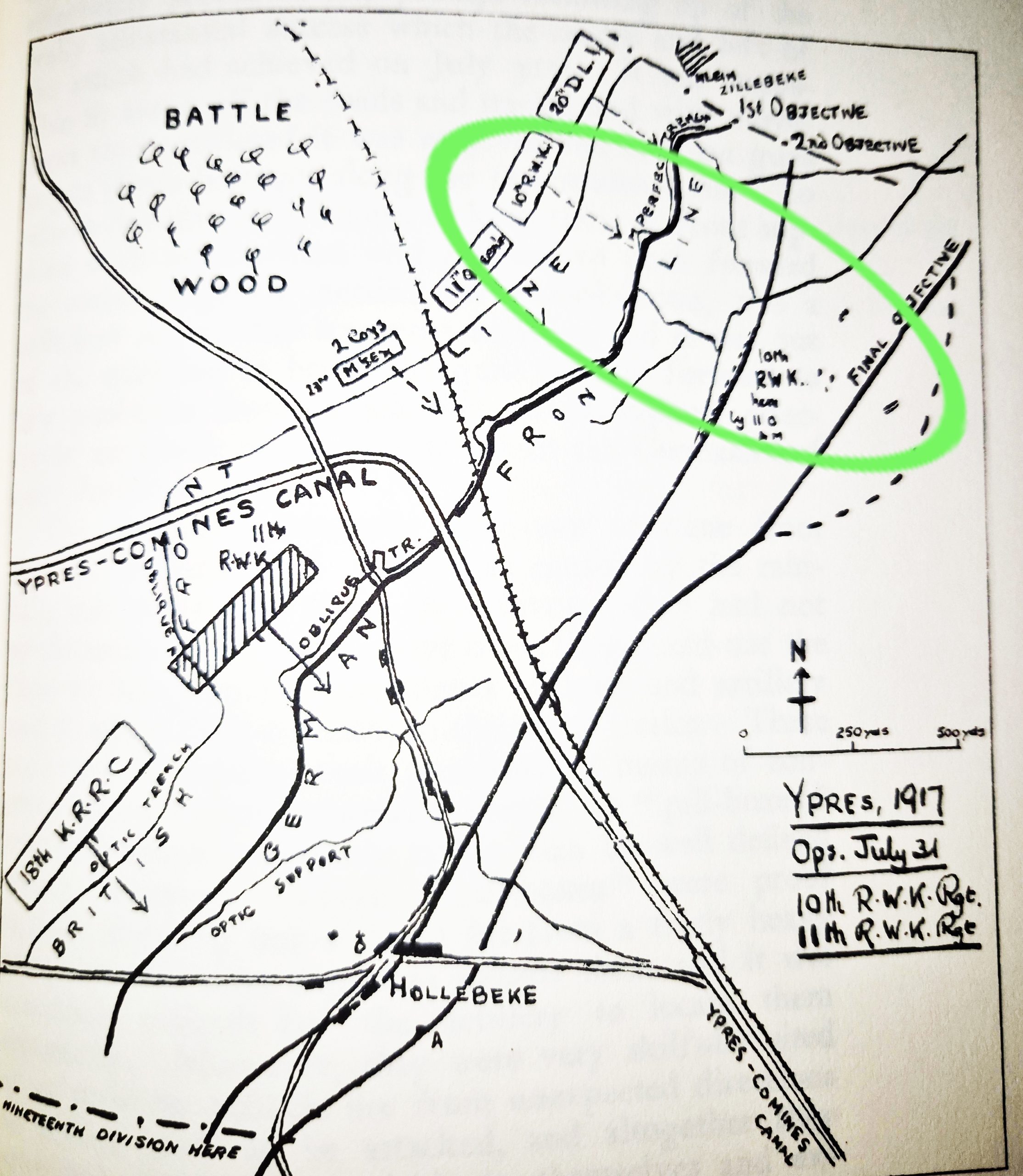
The wait was over by the 31st July 1917, when the 10th West Kents went “over the top” to attack and attempt to capture Hollebeke and clear the ground across the Canal just East of Battle Wood, as part of the Battle of Pilckem Ridge. A battle plan above shows the 41st Division’s sector, with George’s advance from the “Red line” towards the “Yellow Line” marked “123 Bde”. To their left was the 20th Durham Light Infantry and the 11th West Kents were on the right. The 10th Bavarian Division whom they had to face were stout foes and offered a determined resistance. The conditions during the battle are evident in the image below, taken at a nearby objective of Zonnebeke on the same day.

Casualties were heavy, and the attack lacked heft, but the advance party of the 10th West Kents took their objective by 8am and started to consolidate their new position. The supporting companies moved up a little later, but got pinned down at the first objective by heavy machine gun fire coming from pill-boxes beyond the trench being held by the advance party at the second objective. Throughout the day, two officers crossed no man’s land multiple times in an effort to reorganise the attack, and run messages.
The day ended with a torrential downpour, further flooding already waterlogged trenches. Their success brought an extra 100 men up to the objective trench, but the casualties were heavy, recording a total for the day of 5 officers killed and 3 wounded, with a further 230 men wounded, 33 killed and 56 listed as missing.
The 10th West Kents had three uncomfortable days holding the this new frontline trench, before being relieved for a four day rest, only to return for a further four days back in the same position. During these days, a 15-strong raid party cleared the German pill-boxes and machine gun emplacements which had checked the advance on the 31st and inflicted such heavy casualties. It was an overwhelming success, which yielded 40 prisoners at the cost of just one casualty.
The area to the rear of the new front line had been reduced to little more than a stretch of bog, making reinforcement and resupply, if not impossible, extremely slow and hazardous. The enemy rained down shell fire at the few accessible routes, and bringing forward the British guns was out of the question. Furthermore, the ground the Germans had retreated to was in better condition, having been the previous rear areas, and was scattered with strategic strongholds which housed machine gunners. These “pill-boxes” were almost immune to anything except a direct hit from a heavy artillery shell, and could deliver fire from almost any direction from which they were likely to be attacked.
Tower Hamlets
A month was spent near Bolougne with the usual recreation and training. They received drafts of men to replace mainly stretcher bearers, signallers and Lewis-gunners they had lost of the 31st July. The Battalion never made it back to full strength before it marched the 40 miles back to Ypres. By the 18th September, they were at Ridge Wood ready for another attack. The objective was an area of high ground which had been given the name “Tower Hamlets Ridge.” The 10th RWK were to be held in reserve.
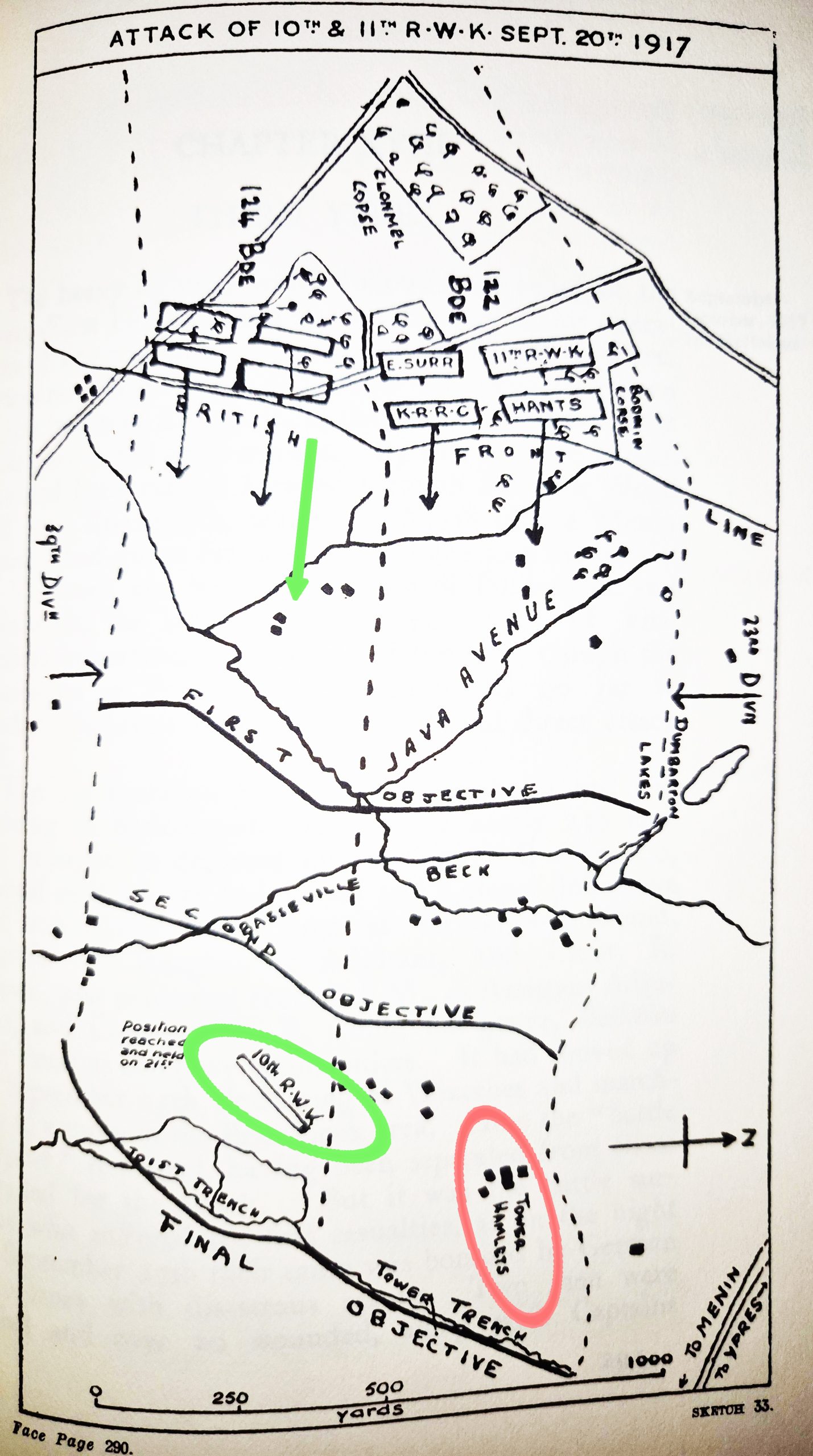
On 20th September, The attack started, with the first waves coming under heavy machine gun fire, with artillery and gas attack besides. They watched as their fellow 11th RWK battalion, pushed forward, finally reaching just short of the second objective. A counter-attack was attempted by the enemy on their right, which, despite exhaustion and having taken many casualties, they managed to repulse with rifle fire.
The following morning it was their own turn. Ernest and the 10th RWK went over the top and advanced towards a formidible enemy. The Germans rained down heavy artillery more or less all day, starting at 4.30am. Snipers and machine-gunners also kept busty. The 10th managed to reached just-short of their objective, but were still about level with Tower Hamlets, so they dug-in and held their position. Reinforcements destined to support them got held back, and they were left to beat back counter-attacks in the afternoon and evening, from the Germans, alone. The following evening they were relieved, and had time to count their losses for the day. 32 men killed, 24 missing, 103 wounded.
Rest and reinforcement at the Coast
The 10th RWK departed Ypres and was moved to a very unfamiliar part of the line in the coastal area East of Dunkirk. Football, sea-bathing and more leave than had been possible before was intermingled with some training. This was a welcome change from the misery and horrors of the Ypres Salient.
It was not without risk, with night bombing and occasional shelling breaking up an otherwise peaceful experience. After being brought up to full strength, they were relocated to Teteghem, France for training in open warfare.
Ernest was promoted to Lance Corporal on 7th November 1917.
The Italian Front
They received orders to embark trains headed for Italy. The 10th West Kents were to take up positions near the river Piave, North-West of Treviso. The journey was to take four and half days, with frequent, but short stops between, rather than at, stations. The scenery provided some pleasant distraction, and through the Riviera the local inhabitants came out with gifts of fruit, tobacco, flowers and food. Arriving at Isola della Scala, the 10th West Kents disembarked, and immediately received orders to start for the Piave front, where the defeated Italian were rallying.
The difference in scenery, with the mountains getting nearer and nearer, and vineyards and maize fields instead of the uninteresting lands of Northern France and Belgium, helped to get them along; and if maps proved inaccurate and billets of ten uncomfortable, the plentifulness and cheapness of the wine and fruit were sufficient compensation. The march was no easy task though, with men laden with around 90 lbs of kit each for the 100 mile march. The knowledge of these British reinforcements undoubtedly encouraged the Italians to hold fast at there lines on the banks of the Piave. The 10th West Kents finally arrived to take up their positions, and saw very little enemy activity, apart from the odd sniper or patrol.
On 19th and 20th February, the battalion sent out patrols across the Piave in boats, taking some casualties.
The German Spring Offensive & a Dark Day for the 10th
Their time in Italy, though was comparatively uneventful, with the battalion returning to France in the first week of March. They de-trained at Doullens, and were subsequently quartered in Beaudricourt.
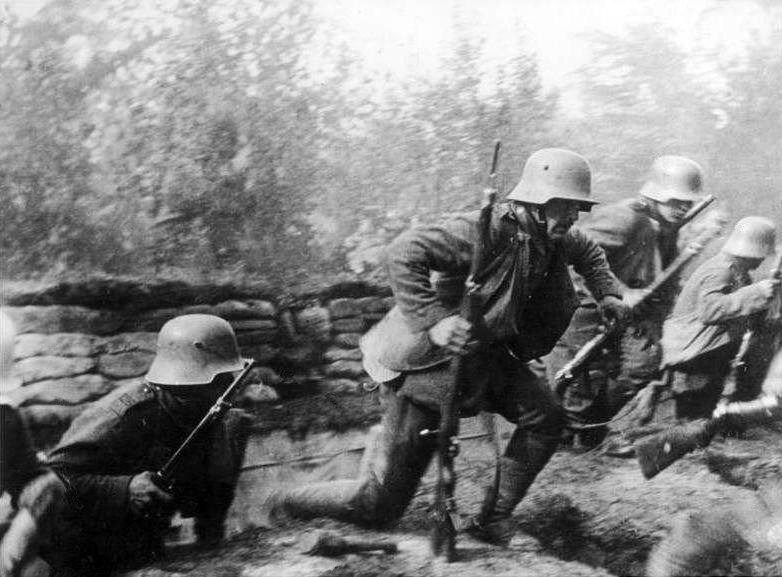
On the morning of 21st March 1918, a tremendous barrage crashed down on the British Lines, signalling in unmistakable fashion, the start of a German attack. Despite being under-strength, the 10th RWK, after being moved a couple of times, were ultimately sent to relieve the troops holding the line to the North and North-east of the village of Beugny, in an area East of Bapaume, in the Somme region. At 3pm on the 23rd, Ernest and his battalion were in position, and before daybreak they had dug new trenches.
Their position was not a good one, with a gap on the left of some 1000 yards and in a valley, observation was difficult and they could not see what was happening on their flanks. Enemy shelling and machine gun fire opened up on them at 8am, causing some casualties, and the enemy appeared in numbers at 10am, advancing through their open left flank, giving the Lewis-gunners ample opportunity to inflict heavy casualties. The shelling increased, and the Germans made multiple attempts to attack the position, but the 10th RWK held them back.
Orders were passed for the line to retire back to Beugny, which began at 2.30pm. This order, however did not reach the 10th West Kents, or their neighbouring who became isolated when their flanks were no longer defended. They held their line until all their ammunition was expended. By 6pm, the Germans had finally overcome their resistance.
The reports after the battle showed over 400 men of the battalion were missing, with at least 50 known to be wounded of killed. Some of the battalion managed to escape back to the Divisional lines, around 100 men. One of them was Ernest.
Regroup and Back in Action
What was left of the battalion was moved back to Gommecourt to form a defensive flank, but on the evening of the 25th, whole 123rd Brigade, which was now little more than a fragment, was withdrawn and hastily re-organised. They held the line near Ablainzeville on the 27th March where the 10th West Kents were reinforced back up to 18 officers and 204 men.
They spent some time on-and-off the line at Dickebusch, but the next major action saw them in a second day attack at Gouzeaucourt near Cambrai on 29th September. They advanced under cover of fog, making direction-finding difficult, but keeping them so concealed that they managed to rush the crew of a 4.2in howizer while they were having breakfast! They also captured three 77mm field guns and 5 machine gun positions, with very few casualties. On their flank, their neighbours did not fair so well, meeting stubborn opposition.
The 10th RWK were ordered to withdraw, and did so as the enemy made two determined counter-attacks to attempt to reclaim their lost gun positions. One West Kent Lewis-gun section held them off long enough for the battalion to withdraw, inflicting heavy casualties on the enemy, before retreating back themselves. The day had started so successfully, that they actually took more casualties on the withdrawal than the attack. That night, the 10th RWK were relieved. The operation went down as success, but only within the context of the war as a whole, and they still counted 38 killed, 95 wounded.
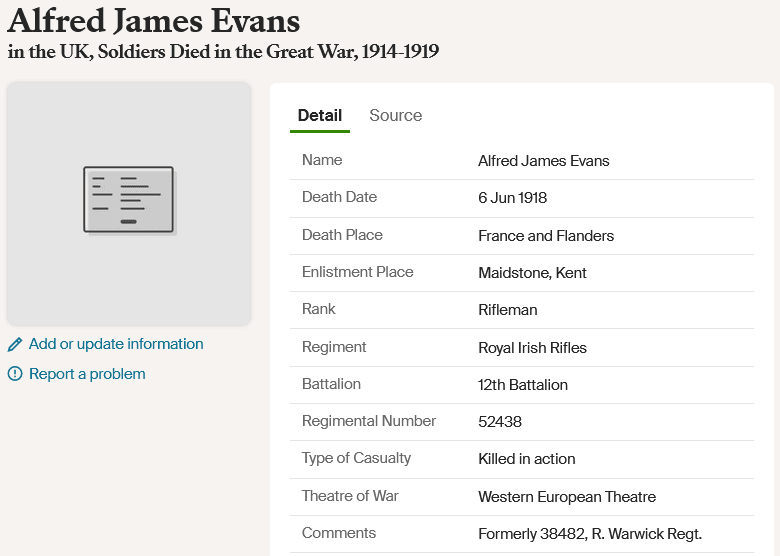
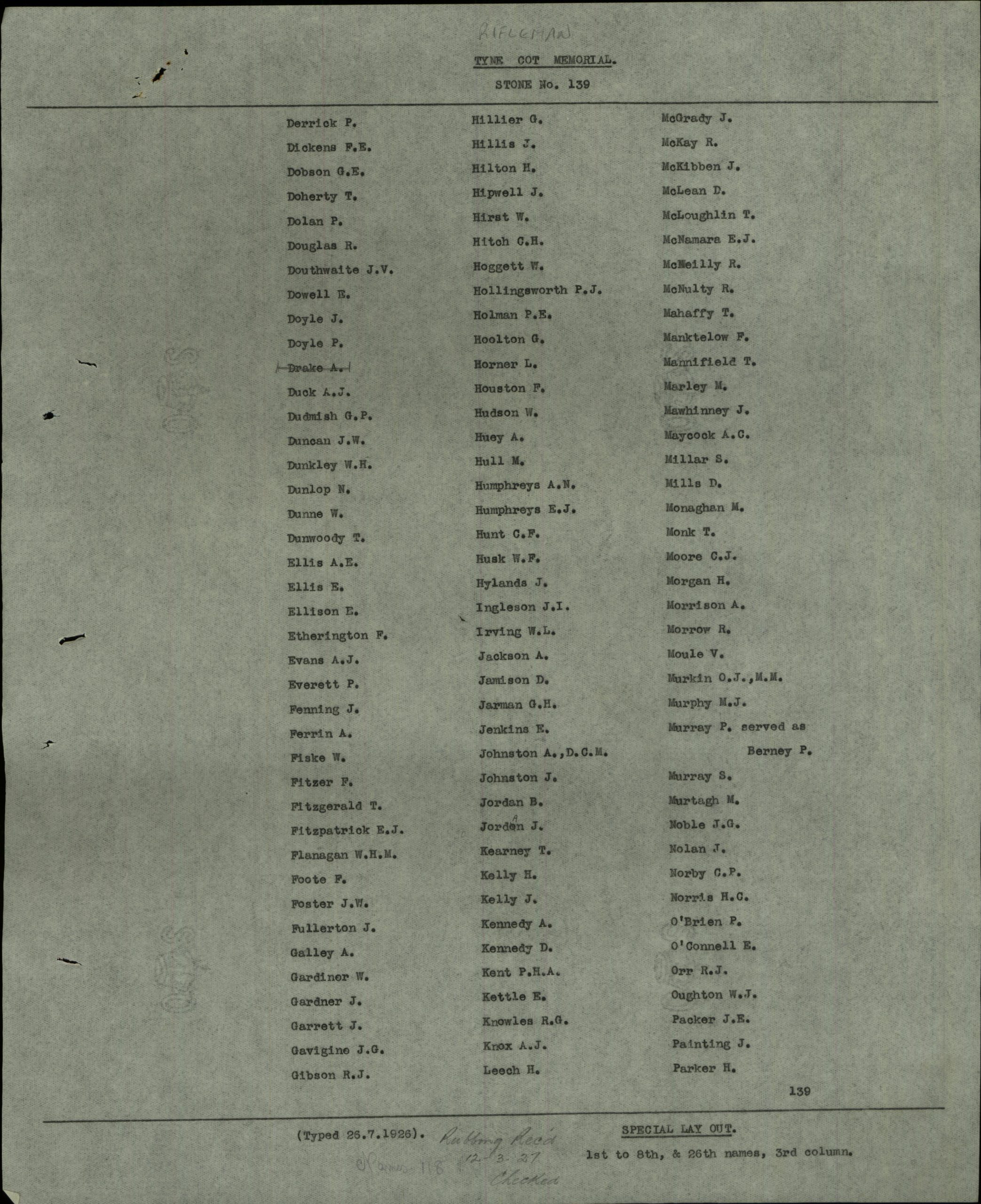
52438 Rifleman Alfred James Evans – 12th Bn., Royal Irish Rifles
We will never know when Ernest found out, but his brother Alfred was killed in action on 6th June 1918 near Ypres. His body was never identified. He is remembered, with honour, on the Tyne Cot Memorial along with 35,000 other allied servicemen who died on the Ypres Salient, who have no known grave.
He is additionally commemorated on the Borough Green War Memorial.
The brigade was moved to press the advance on Menin, just South of the Ypres-Menin road, and on 1st October they advanced towards Gheluwe under heavy shelling. They became held up by a trench system called Gheluwe Switch, which they attacked the following day under heavy machine gun fire, taking casualties. Ultimately, they pushed the Germans back and captured the position.
After a Few days rest, they returned to the line on the 6th-8th October and spent a particularly lively couple of nights dodging machine fire and German snipers whilst sending out patrols to clear isolated enemy positions.
After another short rest, they took their place in reserve for yet another attack on the Flanders front near Courtrai (now Kortrijk). The attack began on the 14th October, with the brigade having little to do but follow the advance. By evening, the forward troops were on high ground, overlooking Menin and Wervicq. The 10th RWK moved to billets at Courtrai. On the evening of the 22nd October, they took up front line positions between the villages of Kattestraat and Kwadestraat. The advance had been held up due to strong enemy positions opposite. The positions needed to be cleared to straighten the line of advance. This task would fall to the 10th West Kents. Their final objective would be the Avelghem-Waffelstraat road, but before they could reach it the high ground would need to be secured.
With no artillery support, the attack came under heavy fire from machine-guns immediately, but progress was made nevertheless. After some 400 yards had been gained, they came under fierce machine-gun fire from multiple directions. They finally fell back to their starting positions at nightfall. The following day the attack was renewed with a little more success. This time some of the enemy positions were captured, but increased German artillery and converging machine-gun fire meant they would once again have to pull back.
They were relieved of their frontline duties and placed in reserve for the big attack the following day. The British artillery did it’s job of finally clearing the German opposition, and the way was clear for their advance. The 10th RWKs were used throughout the day to fill gaps in the front as they moved, and clearing of houses in the various hamlets on the way, which included some short moments of intense fighting, on an otherwise easy day. The final objectives were reached the following day, 26th August 1918. The West Kents counted 30 men killed in action during the advance over the previous few days. They received a large draft of replacements, but their numbers were still depleted, and they stood at around 700 men.
The Last Battle
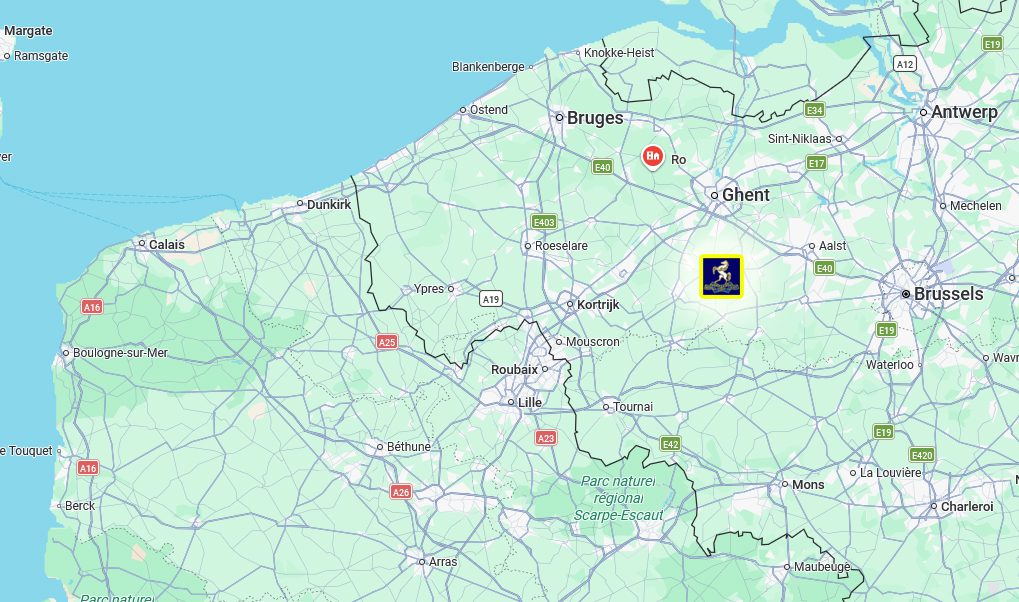
The progress of the Allies had reached a point that the end looked to be in sight. What seemed inconceivable in August had now been practically achieved. After more than a week’s rest at Courtrai, on the 7th November Ernest and his battalion moved to take over the line on the left bank of the river Scheldt below Avelghem. They endured some shelling, and on the 9th pushed forward across the river using small boats.
They continued along, reaching the Nukerke-Renaix road practically unopposed, being greeted and cordially welcomed by Belgian civilians. They overnighted at outposts, before advancing again the following day, reaching various points of strategic interest without encountering the enemy, until their third objective, Schoorische, where they were met with machine-gun fire that was quickly suppressed with their own field gun at a range of 800 yards using open sights. Thus, they reached their final objective at Roovorst by dusk.
The following morning the battalion strood fast as news came through that the Armistice would come into force at 11am that day. The news was met with incredulity and bewilderment, although it seemed to be coming. In the past few days, the Germans had relinquished positions readily that they would previously would have stubbornly defended, and any left behind were keen to surrender. The unreality of going from constant risk and fear of sudden death by bullet or shrapnel only a few days ago, to the prospect of peace and safety was a difficult transition to accept. Many men who experienced the carnage of the Great War would never truly feel at peace again. A new word started to be uttered by the men of the 10th West Kents in their forward holding position, as well as what it would mean, and how soon it might come about. The word was “demobilisation.”
On the 30th December 1918, Ernest would voluntarily relinquish his rank of Lance-Corporal, and revert to the rank of Private.
The battalion would spend the next few months in the occupied territories in pleasant surroundings of various picturesque villages, in forest country near Cologne, a popular holiday destination for people from the neighbouring industrial towns. As the weeks ticked by, their number was reduced as men were sent home to try to return to civilian life as best they could.
Home
Ernest didn’t return to England until 2nd April 1919. His service documents show 2 years 334 days of overseas service with the British Expeditionary Force. He had seen action in France, Flanders and Italy, and been part of the occupying force in Germany itself. Having faced the German machine guns multiple times, he had somehow made it through unscathed. He was allowed home the same day he arrived “back in blighty,” giving his address as Railway Cottages, Wrotham Heath, Platt. He would finally be discharged from service on 31st March 1920, once it was decided there was no threat of resumed hostilities.
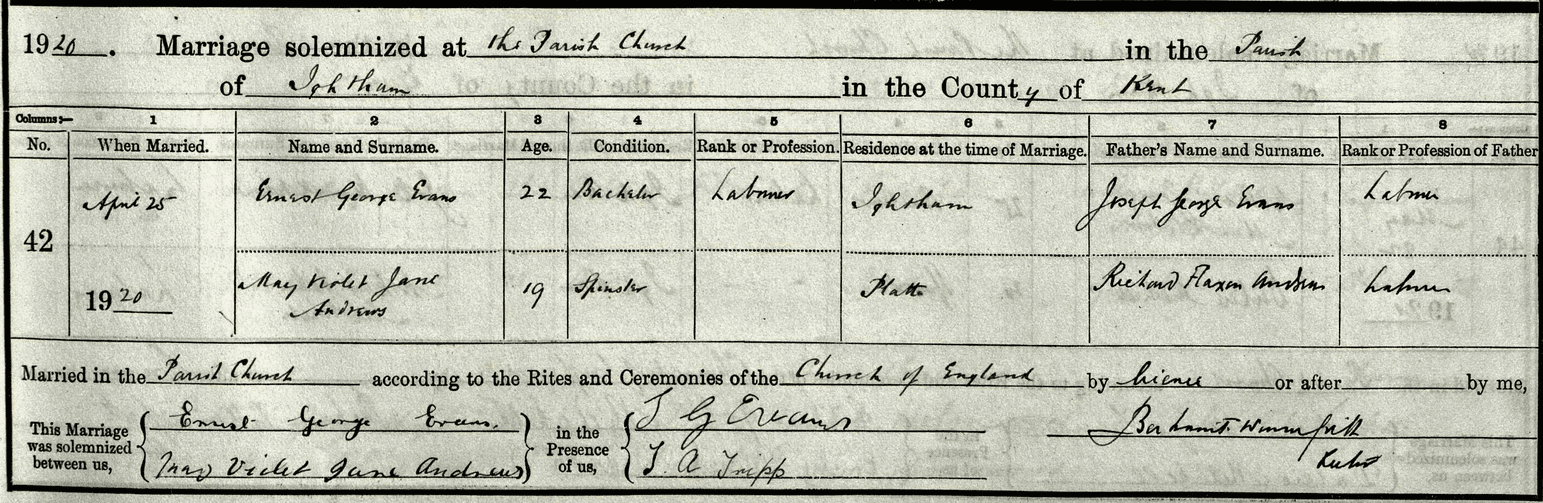
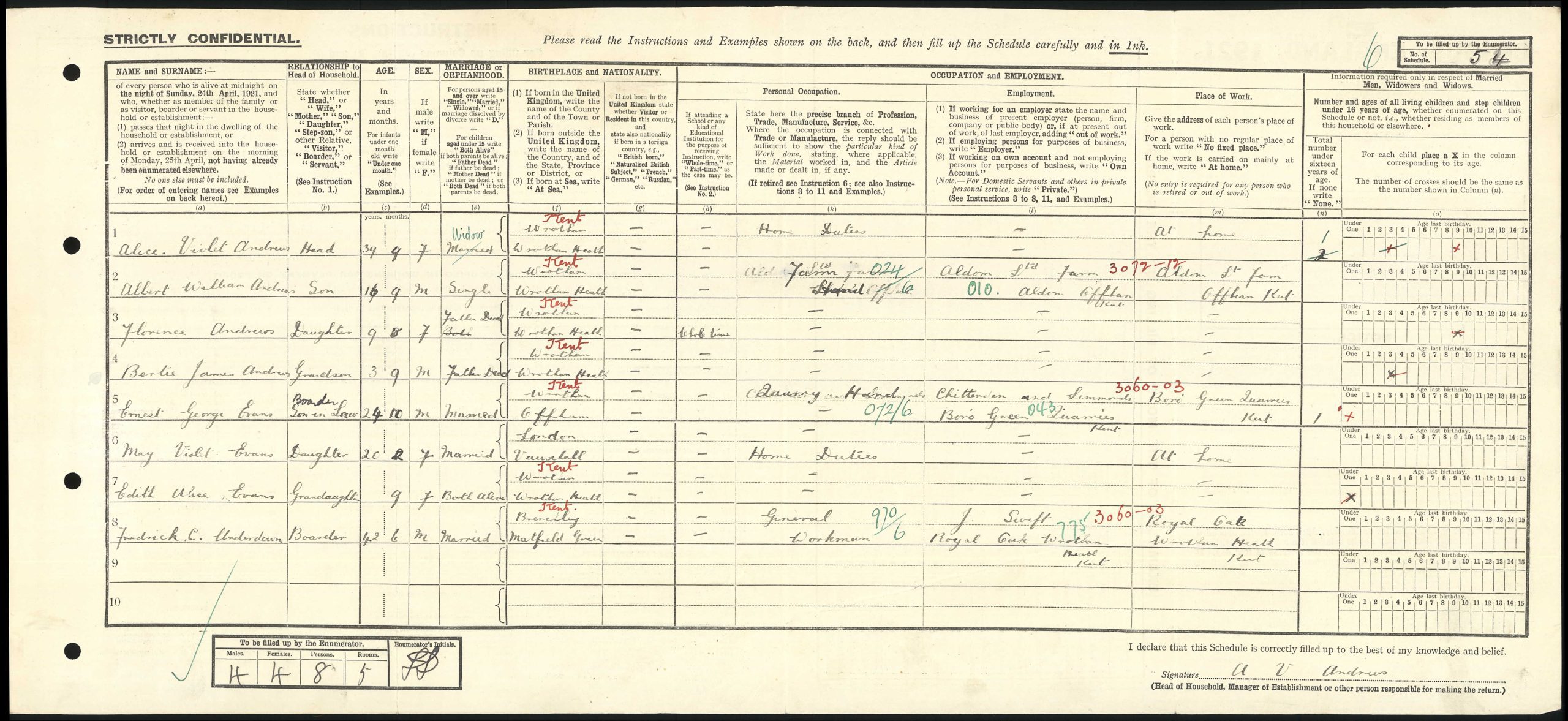
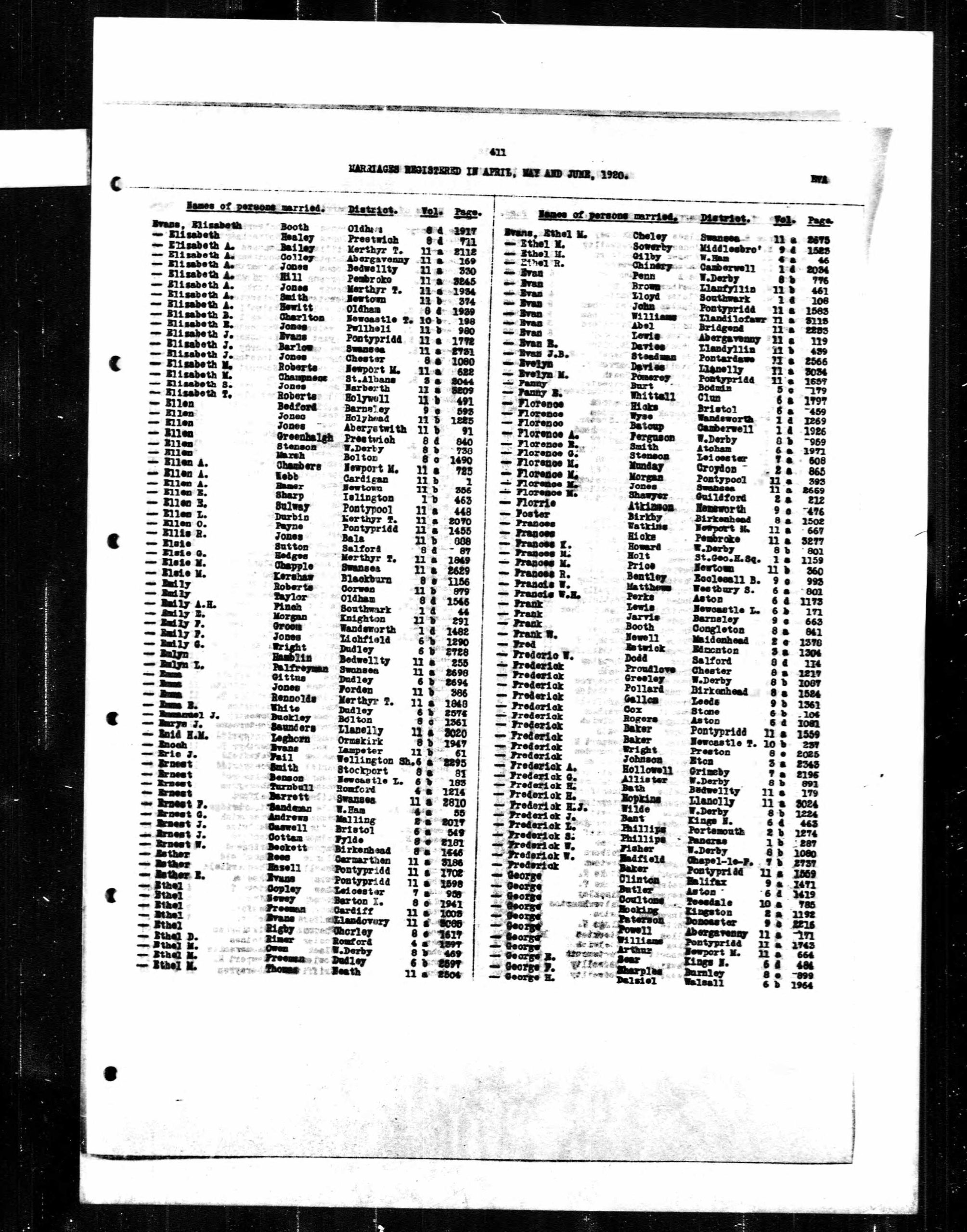
On 25th April 1920, tewnty-two year old Ernest married nineteen year-old May Violet Jane Andrews in St. Peter’s Church, Ightham. May’s father, Richard, had been killed in action in France. Additionally, her sweetheart Bertie Reeves, with whom she had a child when she was only sixteen, had been killed in the Spring Offensive of 1918. Both are listed on the Platt War Memorial.
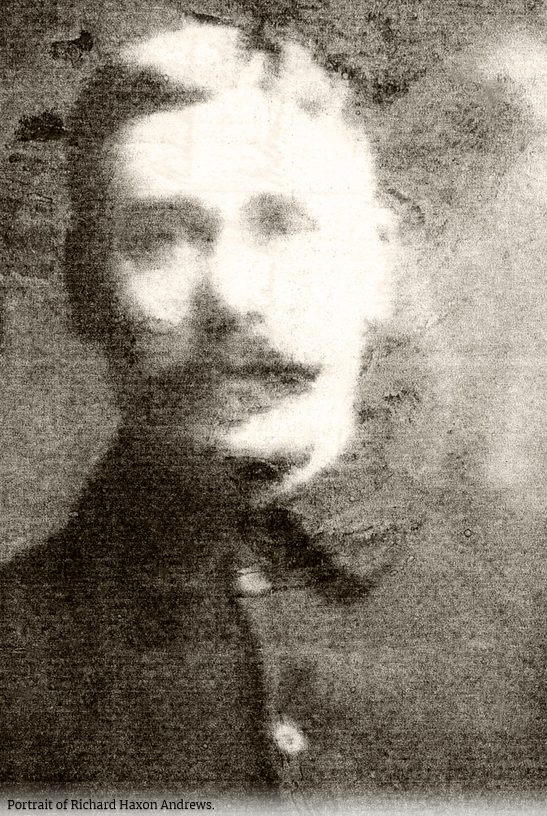
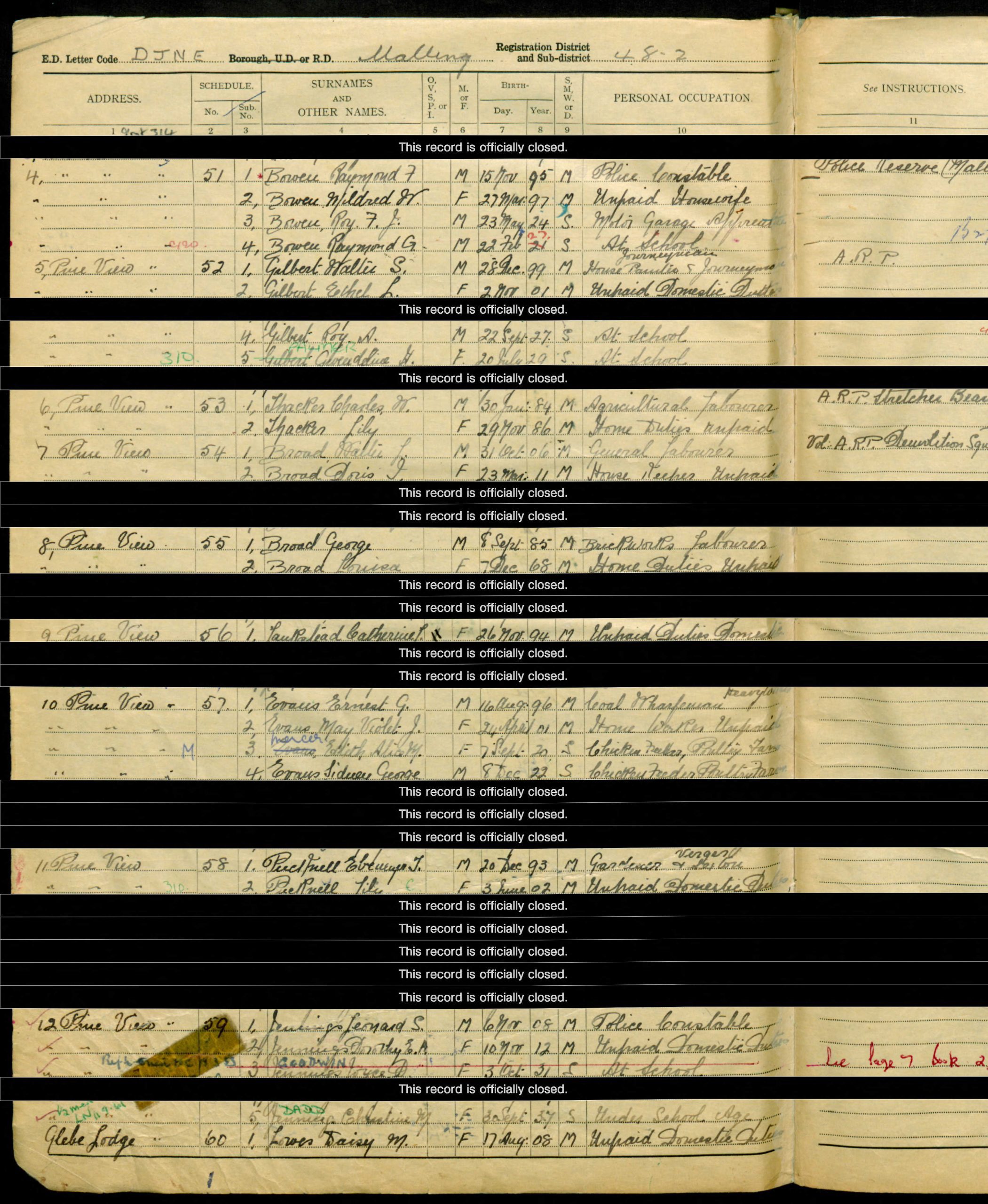
Ernest and May went on to have four children together. In 1939 they were living at 10 Pine View, Platt, with Ernest working as a “coal wharfman,” possibly on the railways.
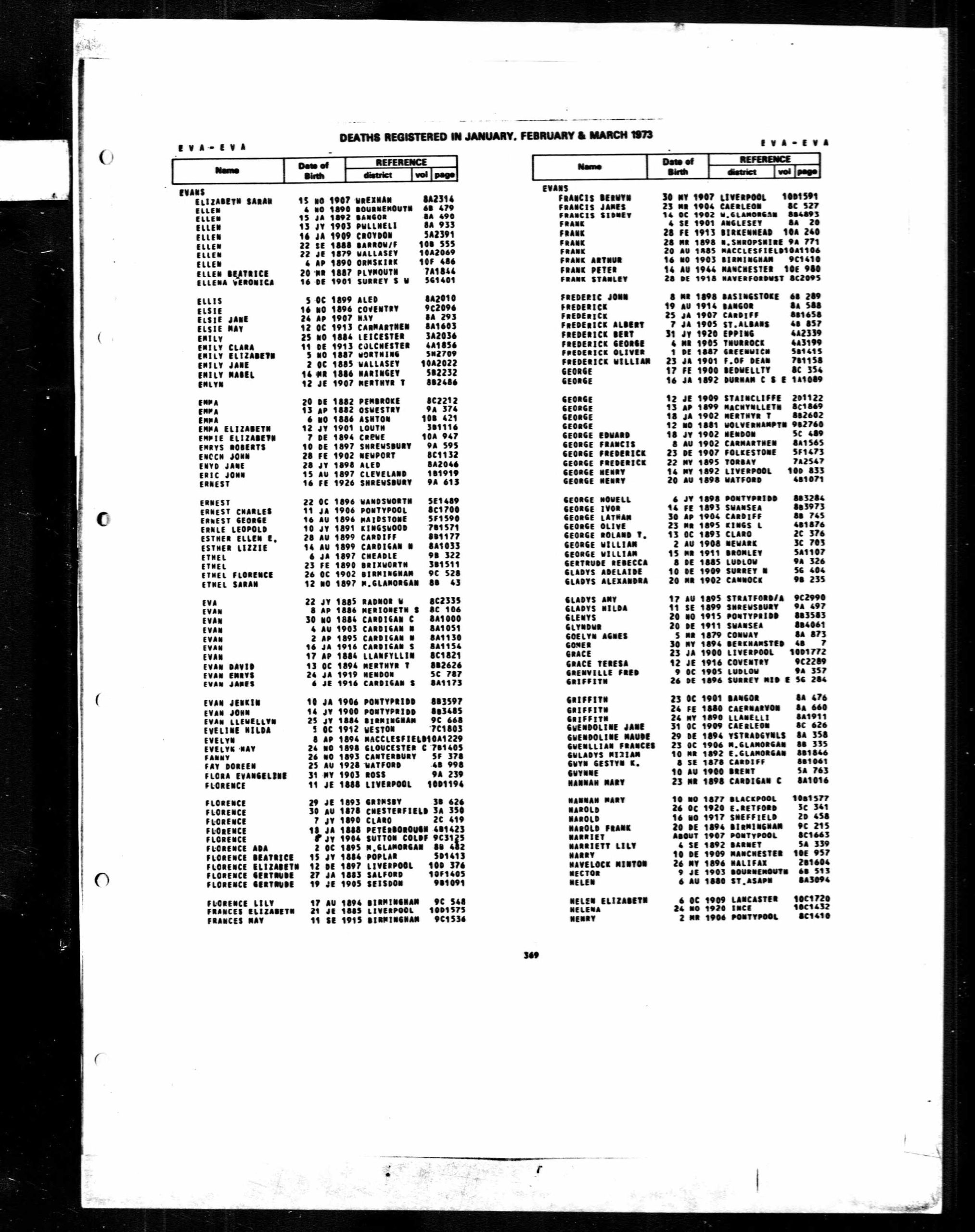
Ernest Died in March 1973, aged 76. His wife May lived on until 1980.
Relevant research documents
- Surviving Service Documents (PDF)
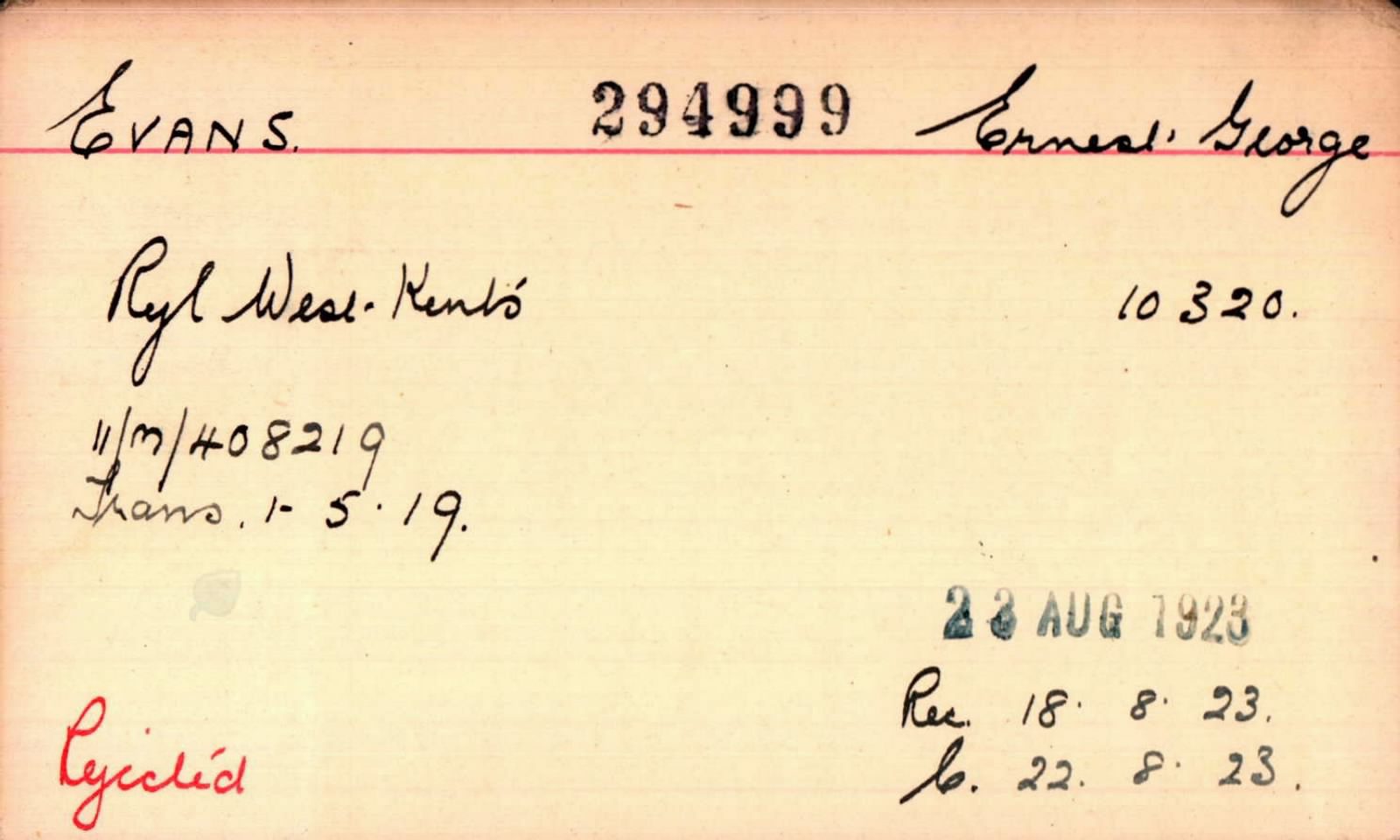
- Medal Index Card
- Medal Roll
- Pension Index Card
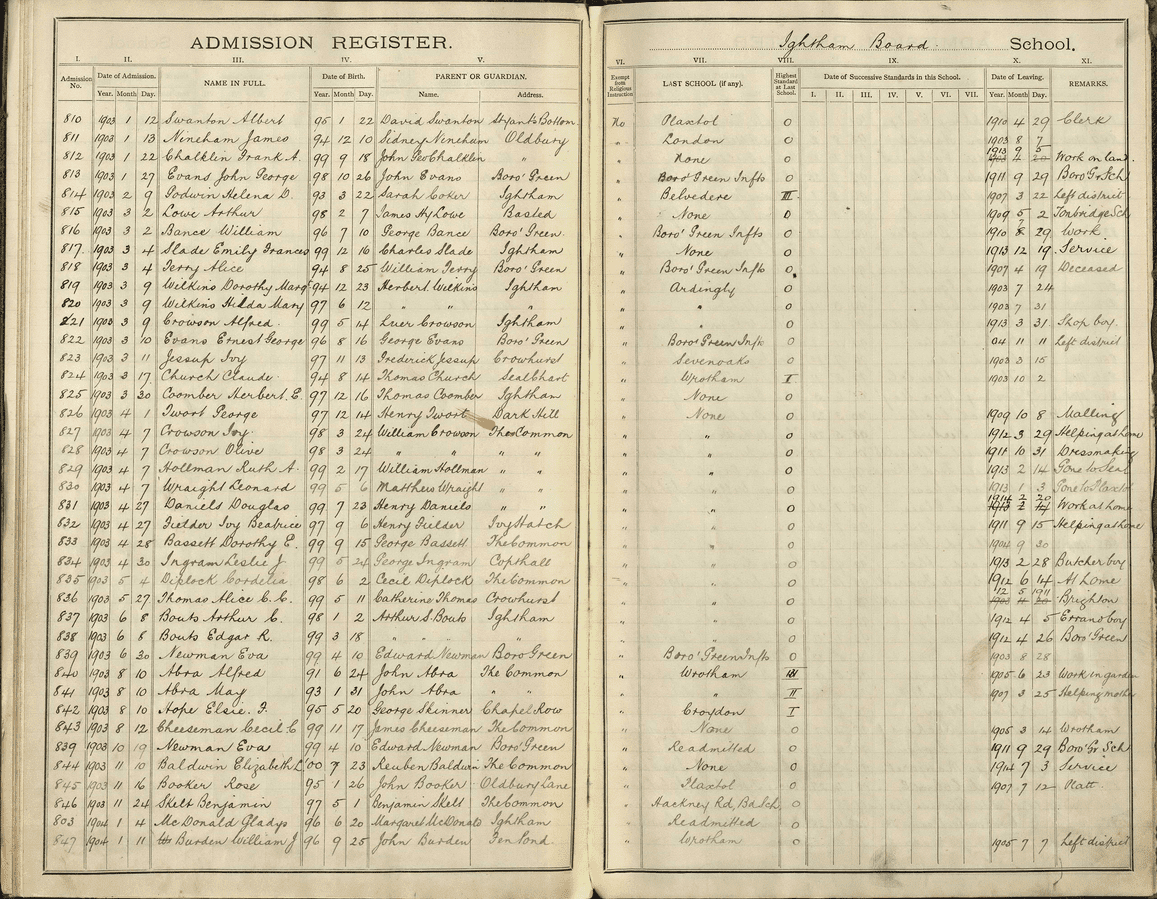
- National School Admission Register
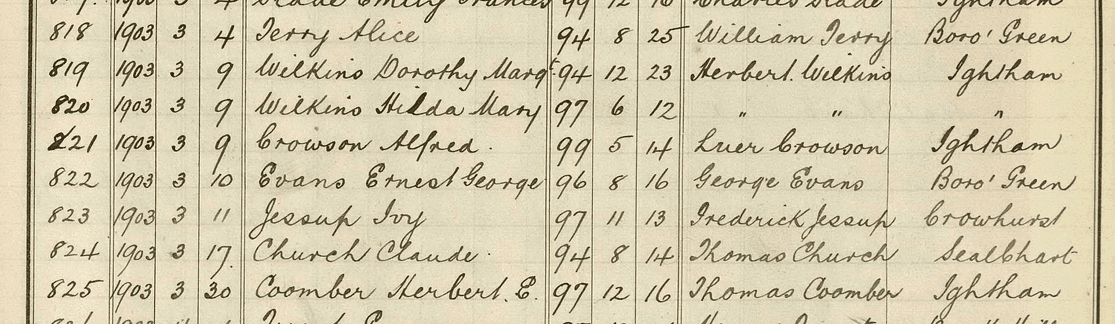
- National School Admission Register - Entry
- Listed as a Platt Parish Soldier
- 1901 Census
- 1911 Census
- 1921 Census
- 1939 Register
- Birth Register
- Marriage Register
- Marriage Certificate
- Death Register
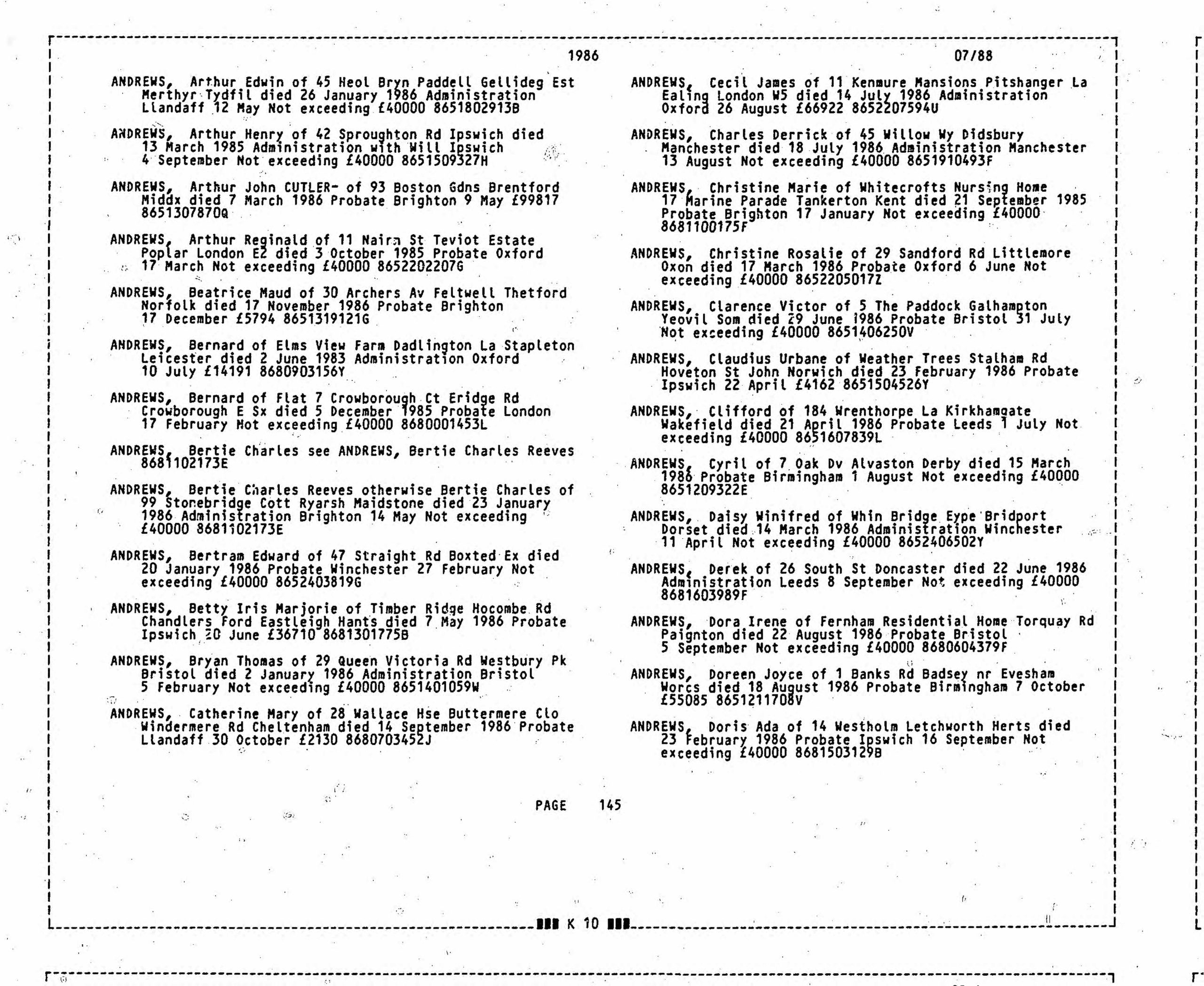
- Bertie Charles Reeves Andrews - Death 1986 - May's Son with Bertie
- Brother - Alfred - on Soldiers Died
- Brother - Alfred - Irish Casualties List
- Brother - Alfred - Effects Register
- Brother - Alfred - Memorial Register
- Brother - Alfred - Panel List
- Brother - Alfred - Memorial Certificate (PDF)
- Bertie Reeves Memorial Certificate (PDF)