
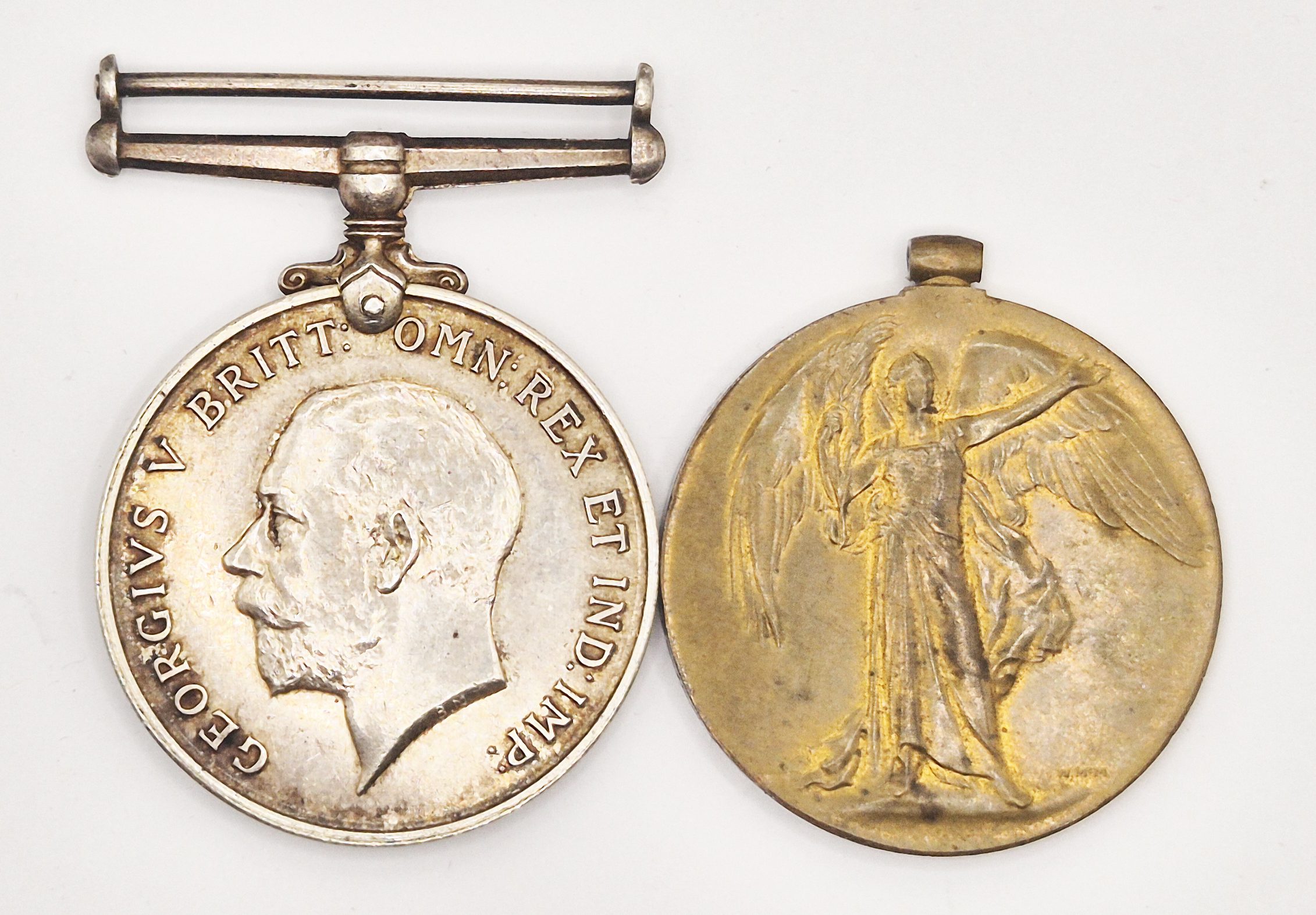
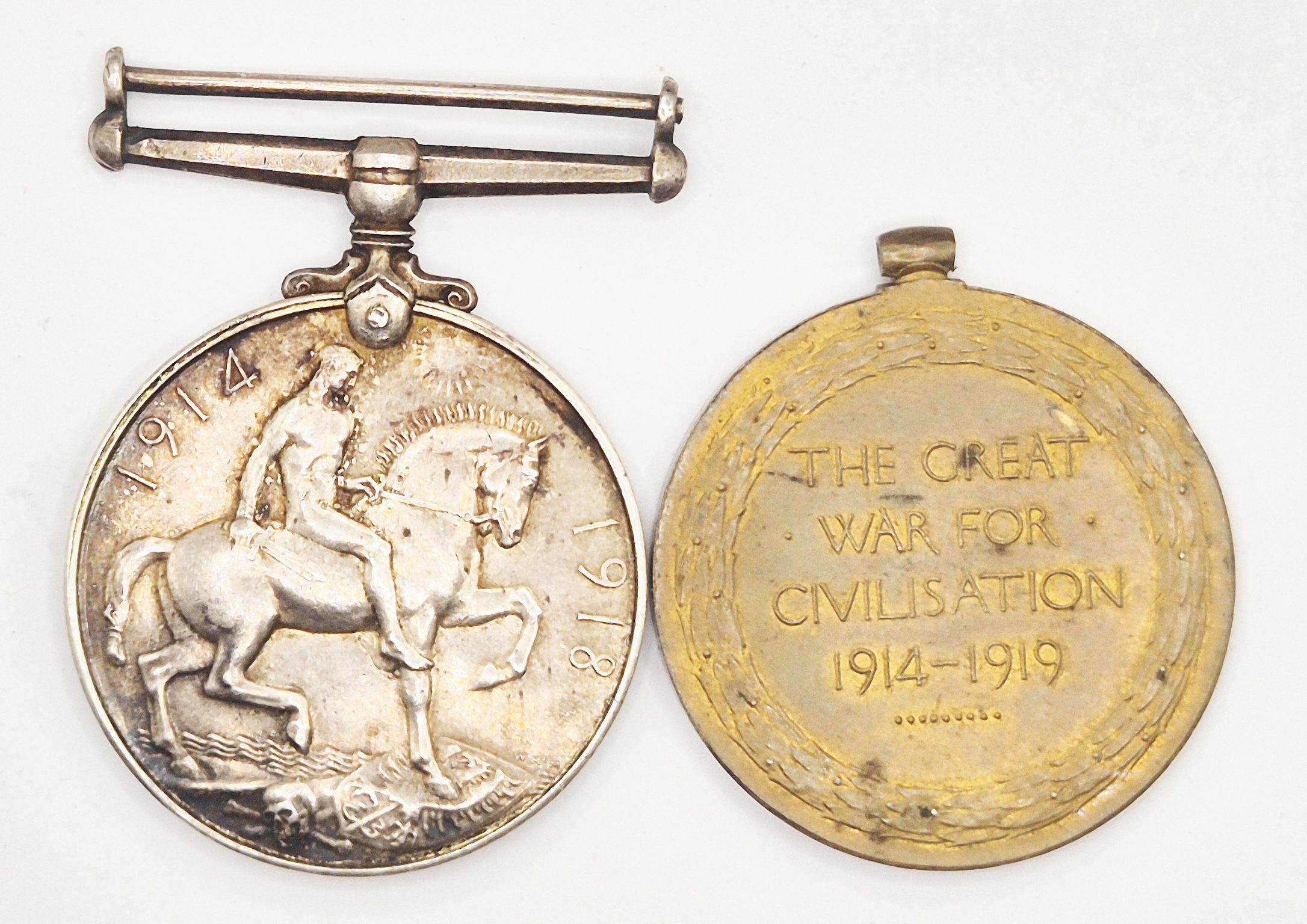
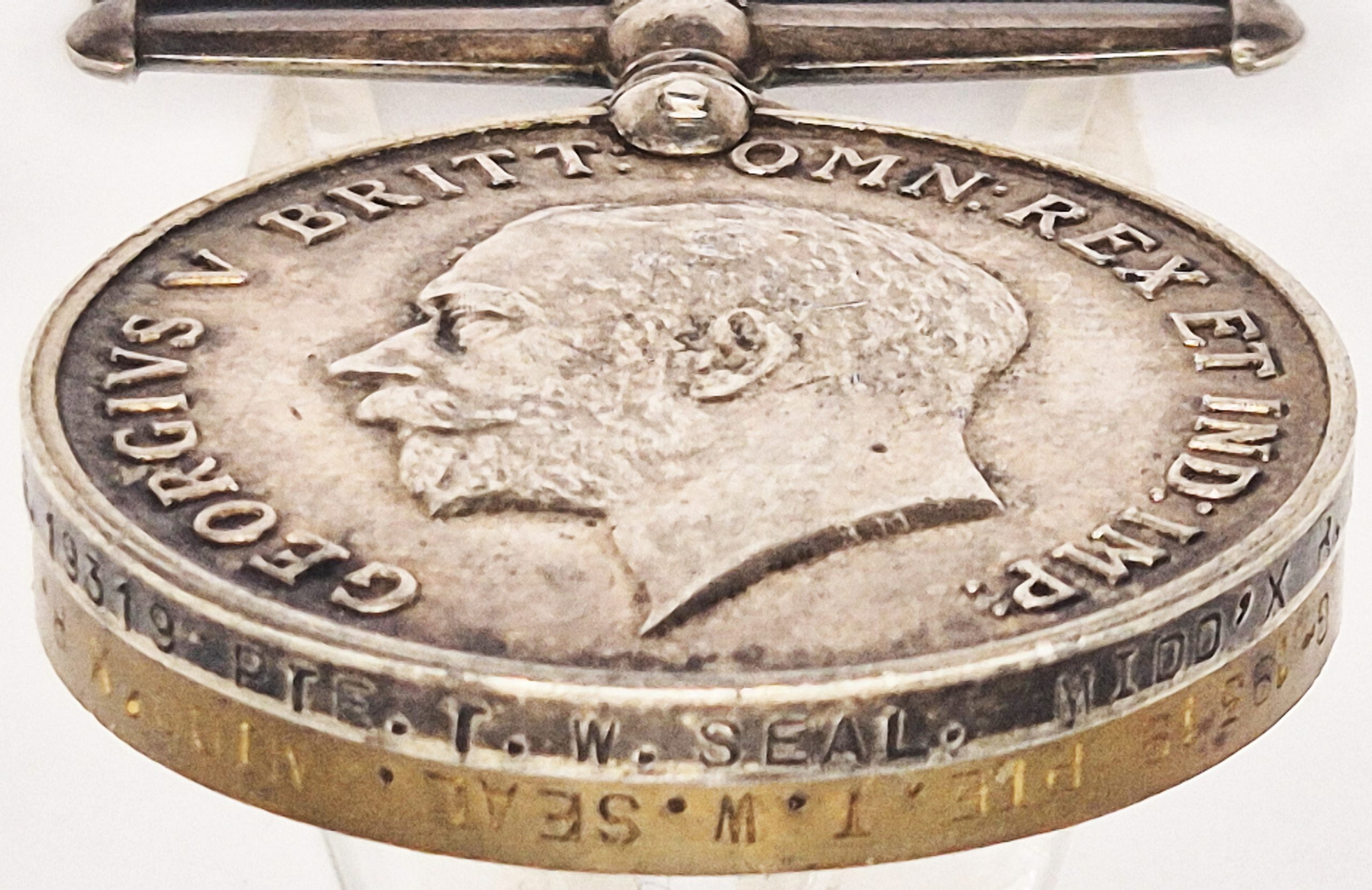
G/19319 Private Thomas William SEAL
19th Battalion, The Middlesex Regiment
FAMILY
Thomas first appears, aged three, on the 1901 Census. He is living with his parents, Thomas (30) and Eliza (35), and his older sister Alice (5). Thomas is working as a gardener. The family live at 45 Turnpike Cottages, London Road, Wrotham, Kent.
By the 1911 Census the family, now at 33 Turnpike Cottages (which is listed as a 4 room “tenement”), has expanded, with a further three girls, Ivy, Lily and Kathalin. Thomas, now thirteen years old, is listed as a school boy and grocer’s errand boy.
Service Documents
As with a great many soldiers of the Great War, Thomas’ service records are no longer available. During the night of 7/8th September 1940, there was a heavy German air raid on London and the repository was hit by incendiary bombs, destroying the greater part of the 1,400 tons of War Office records which were held there in the subsequent fire. Approximately two thirds of service records were completely destroyed and those which survived were partly charred or water damaged when the fire was extinguished.
War
By 1916, Thomas was eligible for war service. it is unknown whether he volunteered, or was compelled under the Military Service Act that specified that single men between the ages of 18 and 41 were liable to be called-up for military service unless they were widowed, with children or ministers of religion. Conscription started on 2nd March 1916.
Thomas was posted to the 19th (Service) Battalion (2nd Public Works Pioneers) of the Middlesex Regiment, which was part of the 41st Division. Whilst the battalion arrived in France on 2nd May 1916, most men joined battalions of their local regiments, particularly if they had volunteered for service. So it is very likely his posting was part of a draft of reinforcements to replace men who had been killed or wounded.

Pioneer Battalions were designed to be equipped and trained as conventional infantry. The difference was that they were intended to be more closely affiliated to the divisional Royal Engineers than with the brigades of infantry. Consequently they were to be provided with a selection of technical stores, and would be given special training in entrenching, road-making, demolition and other work which could generally come under the description of ‘pioneering’.
Because it was envisaged that these units would spend much of their time digging, they were initially ordered to ensure that at least 50% of their strength should be composed of men who were used to working with pick and shovel. The other 50% had to possess a recognised trade. The skills decreed as appropriate ranged from masons and bricklayers to those found in any of the metal trades. By 1916, however, with most skilled men having already been lost, or having already enlisted, their number was often made up with unskilled men out of necessity to make up their numbers to full strength.

As with all pioneer battalions, William would have worn the “collar dog” insignia on his uniform. The design incorporates a crossed rifle and pick, representing the dual fighting and labouring aspects of such a battalion’s role.
Actions of the 41st Division
The 41st division saw action throughout 1916 and 1917. It is not known when exactly William joined the 19th Middlesex, so what follows are a few actions they and the rest of the division were involved in.
In 1916: The Battle of Flers-Courcellete and the Battle of the Transloy Ridges, both as part of the Battle of the Somme.
In 1917: The Battle of Messines.
Passchendaele
This brings us upto the last action of the 41st Division we can be fairly sure Thomas would have been a part of.
The weather conditions and artillery had reduced the trenches in the sector to little more than mud-holes. This was the only cover the 41st division front line had for 6 days of sporadic German shelling.
The wait was over by the 31st July 1917, when the 41st Division was ordered “over the top” to attack and attempt to capture Hollebeke and clear the ground across the Canal East of Battle Wood, as part of the Battle of Pilckem Ridge. A battle plan below shows the 41st Division’s sector, with their advance from the “Red line” towards the “Yellow Line”. The 10th Bavarian Division whom they had to face were stout foes and offered a determined resistance.

After being wounded, Thomas was evacuated to one of the casualty clearing stations located just East of the village of Godewaersvelde, near the Belgian border, about 16 kilometres south-west of Ypres. It was halfway between Poperinge (in Belgium) and Hazebrouck (in France).
Sadly they were unable to save him and on 8th August 1917, 19 year old Thomas died of his wounds. He was buried in the nearby cemetery, now known as Godewaersvelde British Cemetery, where he is remembered, with honour, along with 971 other men of the British and Commonwealth forces and 19 German soldiers who died in the Great War. His headstone (and quite possibly, grave) is shared with “25338 Pte. A. Bates – East Surrey Regiment” who died the day before. In addition, Thomas is erroneously named as “William Thomas Seal.”


Thomas is also listed on the village war memorial outside St George’s Church in Wrotham.
The 1921 census shows that his father, Thomas, was the gardener at the Wrotham cemetery and on the church comittee.


ORIGINAL RESEARCH DOCUMENTS
- Medal Index Card
- CWGC Memorial Certificate (erroneously recorded as William Thomas Seal)
- Grave Registration Report (erroneously recorded as William Thomas Seal)
- Cemetery Register (erroneously recorded as William Thomas Seal)
- Headstone Document (erroneously recorded as William Thomas Seal)
- BWM and Victory Medal Roll
- Soldier's Effects Register
- Next of Kin Pension Index Card
- Next of Kin Pension Index Card 2
- Next of Kin Pension Index Card 3
- The remaining Seal family on the 1921 Census
- Father - Thomas Seal on 1939 Register - aged 68
- 19th Middlesex War Diary Page - Pilckem Ridge Action of July 1917
- 19th Middlesex War Diary Page - August Start
- 19th Middlesex War Diary Page - August


